USA Today Feature: Future of Virtual & Hybrid Events Campaign

I’m excited to be a parter with Mediaplanet for their Future of Virtual and Hybrid Events campaign which launched this week. The event planning industry has gone through what was probably the most difficult year in its history, but event planners are primed to make a major comeback.

You can learn more about the tools and resources to make your next virtual/hybrid meeting or event a smashing success by picking up a copy of the campaign in USA Today. The virtual campaign can be found online by visiting the website.

I’m a firm believer that virtual conferences of the past year have had a positive impact. The digital events have enabled more people to attend virtually. Many of these events have been free, with participants paying a small fee to access slides, if they choose.  My article for the campaign outlines, How Virtual and Hybrid Events Are Helping the Events Industry Thrive Post-Pandemic.

Hybrid events have allowed brands to have an extended impact, helping them reach a broader audience and drive deeper engagement online. Plus, by developing content and deeper connections with speakers and attendees from virtual events, brands can stand out and have higher retention.

Now’s the time to use digital event platforms to connect audiences and build longer-lasting relationships. Within the article I shared some of my favorite platforms, including Brella, which offers custom, one-to-one meetings, as well as live streaming; and Hopin, which provides webinar sessions, chats and polls, and interactive elements that can be fully customizable and brandable. 

I believe brands must refocus their goals and understand why people will attend the event, whether it’s virtual or in-person. For example, is it for lead generation to drive sales? Content marketing? Engagement? This will allow companies or event producers to refine how they’re doing things, and consider how they might be able to — whether it’s driving sales or driving engagement — mix up and shake up what works and what doesn’t.

Let me know what you think of my article within the campaign. I’d love to hear how you think virtual and hybrid events are helping the events industry thrive post-pandemic. Leave a comment below or send me a tweet with your thoughts.

Social Media Tips for Small Businesses to Ensure Success In 2021.

Social media has become an integral part of everyday life. In fact, many people spend a large part of their day exploring various social media channels. A study from Globalwebinex showed, on average, people spend three hours a day on social networks and messaging.  Given the prevalence of social media, it’s no surprise that marketers and businesses flock to these channels hoping to connect with their target customers.

As social media is becoming more integrated into our lives it provides countless opportunities for businesses looking to reach their audience through various initiatives. That being said, it can be challenging for small businesses to stand out given the massive content overload on social media channels.  Small businesses don’t have the budgets to compete with big brands, who are pumping millions of dollars into paid advertising to promote their products and campaigns. For small businesses to succeed, it’s important to bring social media back to the foundation of what it aims to do, engage.   Having a clear and engaging social media marketing strategy can help small businesses succeed into 2021 and beyond.

I spoke with Clay McDaniel, CEO of  Ripl Inc. regarding social media for small businesses to succeed.   Since many small businesses often can’t afford a social media manager, or don’t have team members with knowledge of how to develop social media content they often look to implement a third-party tool to support their content management needs.  I’ve worked with my fair share of social media tools throughout my career and have been impressed with Ripl Inc.

Clay explained that “With Ripl, anybody can easily manage the social media presence of their business. For about the same price as a lunchtime sandwich per month, you can have thousands of customizable templates available to your company with over 500,000 high-quality images and 90,000 videos at your disposal. You can quickly create trackable professional-grade content and schedule to share it across channels in minutes instead of hours.”

Clay shared several key pieces of advice for small business owners to consider for social media success this January.

  1. Consider focusing on a “hero” social platform. If you feel like you’re spread too thin tying to manage all of your social channels, see if one is performing much better than the others and focus your energies there. Some channels don’t make as much sense for certain types of businesses. Visual platforms like Instagram often benefit retailers, while Twitter can be beneficial for sharing news and managing customer service.
  2. Understand Your Customer – Small businesses often can’t afford to do mass marketing, so you need to make sure your social media activity is pinpointed to your customers’ needs. Spend the time to really personify your customer and what will speak to them and that will help as you develop new content throughout the month and year.
  3. Set goals for your social pages – Having a page just to have a page isn’t the best strategy, so set some measurable goals so you know what’s working and not. Perhaps that means brainstorming new types of content, posting more often or at more regular intervals, or doing more community management on your social media channels.
  4. Add a call-to-action button– This button sits just under your cover photo on your Facebook business page and can be added to Instagram, as well. Make sure it fits your business so potential customers can engage immediately to “Shop now,” “Book now,” “Sign up” and more.
  5. Delete or archive old content – Comb through your past Instagram posts and Twitter tweets and decide if any are outdated or no longer applicable to your business. Go through each of your story highlights at the top of your Instagram feed and remove outdated content…and if you’re not yet using Instagram stories for your business, you should start. This is a great way to keep important content indefinitely since highlights last forever while stories only last 24 hours on the platform. Be sure to also go through your past tweets to determine if there are any that might spark controversy or seem tone deaf and delete those, as well. 

COVID-19 has been a game changer for small businesses both within the United States and across the world.  Facing financial constraints and major limitations imposed by the pandemic has resulted in the need for many small businesses to pivot and come up with innovative solutions to reach their customers in order to survive (and hopefully thrive!).

The advice Clay shares above is crucial for small businesses to succeed on social media channels.   Small businesses have one major advantage over big corporations in my opinion, they can be nimble and seize opportunity.  The ability for a small business to lean in and adapt social media channels in order to evolve in a rapidly changing world is key.

What additional social media tips would you give for small businesses to ensure their success into 2021?

Please take a moment and leave a comment below!

Social Selling – How Businesses Can Boost Their Sales

Guest Post from Sudhir Kumar, Origin.

Not that long ago, consumers didn’t have information at their fingertips and businesses were often successful in using outbound sales and marketing methods such as cold calling and email blasts to close sales.

And, it’s been revealed that just 16% of organizations that use outbound methods feel it delivers ROI, 44% of direct mail is never opened, and 86% of consumers skip TV ads on recorded shows (Source: HubSpot)- Click to Tweet.

Today, the buyer and the buyer’s journey have changed thanks to the internet of things (IOT) and advancements in technology. Now, 57% of the purchase journey is completed before a customer has even contacted a business (CEB), and 67% of the buyer’s journey is now done digitally (Source: SiriusDecisions). Click to Tweet

Added to this, in 2019, there were 3.48 billion active social media users worldwide, which presents a huge opportunity for businesses to take advantage of.

The rise of social media usage has encouraged organizations to look into ways that can utilize the technology to improve their sales, which has led to the development of social selling.

So, what is social selling and why should you care?

I define social selling as the process of researching, connecting and interacting with prospects and customers on social media networks. It focuses on nurturing leads, building brand authenticity and building trust with your prospects.

Leading firms have taken advantage of social selling and have begun reaping the benefits it offers. Research has shown that 70% of sales professionals are active on LinkedIn for business purposes, 89% believe social networking platforms such as LinkedIn are important in closing deals and 64% of sales reps that invest time in social media are hitting their sales quota (Source: SuperOffice). Click to Tweet

As buyers are becoming more digitally savvy, social selling becomes a no-brainer. But to stand out from the noise on social media, it’s essential to provide value to your audience through high-quality content, insight and real conversations, to enhance each touchpoint that your audience has with you and your business, from awareness stage through to purchase.

What are the benefits that social selling offers?

  1. It appeals to the modern buyer

B2B buyers have 12 to 18 non-human and human interactions along their buyer’s journey (Source: Sirius Decisions) Click to Tweet. 68% of buyers prefer to research products and services online (Source: Forrester) Click to Tweet.

With this in mind, it’s essential that you develop and push information and content on social channels that resonate with your target audience and provide the solution to their problems.

This will enable you to influence their choices and position your business as front of mind.

2. It allows you to build “real” relationships

How many cold calls do you actually answer, listen to and respond to?

If you’re one of those people that frantically hangs up, cursing as you put your phone down you are not alone. Research from Citizens Advice has revealed that 67% of British adults say that have received an unwanted telephone call and 92% of people don’t trust companies whose sales representatives contact them by cold calling. Click to Tweet

With this said, it’s time for businesses to break down the barriers around selling and get on the same page as their customers. Social selling supports this, as through social media listening tools, you’re able to listen to topics and conversations that are relevant to your industry. This technique will not only give you insight into what’s important to your prospects but it’ll also present new opportunities and leads, giving you an easy way to engage and reach out to potential customers in an appropriate, non-intrusive way.

3. Your competitors are already using social selling

71% of all sales professionals are already using social selling tools, so if you aren’t you may be putting yourself at a disadvantage (Source: LinkedIn). Click to Tweet.

For example, Microsoft is one organization that has taken hold of the power of social selling. Their social selling pilot program started with 15 people selling Microsoft Azure through their LinkedIn accounts to find their own customers. This boosted the productivity of their team by 38% and led to the program scaling to 3,000+ sellers.

4. It builds your social capital

Social capital is built when someone in your LinkedIn network has a problem or an issue and they automatically think and turn to you for help. This will happen when you have positioned yourself correctly on social networks with your activity.

To gain social capital you’ll need to consider social proximity, and your connection philosophy. Instead of connecting with just anyone, connect with people in a targeted manner, and with those who you can genuinely help. Next, you’ll need to ensure your social presence is up to scratch.

Present and share your insight and knowledge and contribute towards discussions and groups to build it. This will enhance your online visibility and will strengthen your social capital.

5. The Mere Exposure Effect

The Mere Exposure Effect was first spoken about in 1968 by social psychologist Robert Zajonc. This social phenomenon states that the more a person is exposed to something, the more they’ll develop a preference towards that thing over time.

Social media gives businesses the ability to tap into this theory through regular and consistent posting and updates. When you’ve created and put into action a dedicated strategy, you can begin to utilize social media channels to your advantage and ensure that you have messages trickling through all the channels that your audiences use, creating multiple touchpoints with them.

However, it’s essential to remember to not just share sales messages and calls-to-action. Instead, share content that adds value to your followers, and offers insight and information.

If you fail to prepare you are preparing to fail…

The infamous quote from Benjamin Franklin couldn’t be truer when it comes to achieving social selling success.

To successfully leverage social selling, you need to optimize your social channels to showcase your expertise. And, it’s the little things that make the biggest difference. For example, research from LinkedIn revealed that members with a photo receive 21x more profile views and nine times more connection requests compared to those that don’t. Click to Tweet

So, what do you need to do to give a positive first impression on your social channels?

Here are my top tips:

  • Post a professional head and shoulders image of yourself
  • Write your bio/summary to highlight your expertise and what you do on a professional level
  • Include links to your website and other social channels to encourage visits
  • Utilize hashtags that your prospects follow
  • Create lists on Twitter to monitor content from specific accounts
  • On LinkedIn include your job title and keywords in your headline, ask for recommendations to boost your credibility and join LinkedIn groups that are relevant to your industry and begin networking in them

Social selling best practices

Once your profiles are ready to be rolled out it’s time to kick off your social selling strategy. Effective social selling takes time and must be consistent to build meaningful relationships with your audiences.

  • Dedicate yourself

Start by creating a plan and setting aside time to dedicate yourself to building your social presence. Being present on multiple social channels can be time consuming, but if you spend 30 minutes every day monitoring your channels, engaging with others and posting content it’ll help ease the pressures and ensure your feeds are always up to date.

  • Create and stick to a content plan

By creating and sticking to a content plan you’ll ensure that there is structure to your posting on LinkedIn.

The purpose of a content plan is to create meaningful, cohesive, engaging, and sustainable content that engages, resonates and attracts your target audience. In today’s social web environment, getting the right message to the right customer at the right time is crucial. And, to stay front of mind, build rapport and trust and position yourself as an expert, you’ll need to have a solid content plan in place.

  • Take advantage of social listening

Earlier I mentioned social listening, and it’s essential to factor it into your social selling strategy. So, create and use social lists and monitoring streams to collate what people are saying about you, your company, your industry and competitors, and identify what questions they’re asking and topics they are talking about.

  • Provide value

Focus your content on providing relevant, informative posts and content, when your audience wants it. This will position you as a thought-leader and build your personal brand. It’ll also help you create relationships with your prospects and gain their trust.

  • Maintain relationships once you’ve created them

Once you’ve made new connections it’s important to stay engaged with them over time. So, comment on and like the content that is posted by your prospects.

And, be sure to offer advice and guidance to them and contribute to their conversations in a meaningful way if they ask questions.

  • Share testimonials

Success stories from other customers have a lot of weight, and research from Pretty Links suggests 92% of buyers trust recommendations from peers and 70% trust recommendations from strangers. Click to Tweet

By gaining and sharing third party testimonials you’ll start to build your credibility with prospects and it’s more likely that they’ll begin to trust your business.

  • Track engagement

Tracking metrics such as likes, comments and shares will allow you to identify the types of content that resonates the most with your audience. And, it’ll enable you to determine if your social selling activities are paying off.

In addition, by establishing what content is getting the most engagement you can adjust your content so that you’re producing more of what is preferred by your audience. For example, if you notice content about a particular topic is getting high levels of engagement, this will suggest that your audience is interested it in, so why not produce more and give your audience what they want?

  • Understand when to take your connections offline

To land a sale you’ll need to escalate the connection with a prospect by offering them a call to continue the conversation offline and on a deeper level. And, it’s important not to try and push a call before prospects are ready as this will damage all of your nurturing efforts.

******************************************************************************

Sudhir Kumar is marketing director at Origin Blurbs. For more information like this article please connect with him on LinkedIn: www.linkedin.com/in/sudhirkumarorigin.

10 SIMPLE & EFFECTIVE THINGS TO TRY WITHIN SOCIAL MEDIA THIS YEAR FOR ONGOING SUCCESS

I’m thrilled to share a post from one of my oldest colleaguesDhariana Lozano. I’ve worked with Dhariana for over ten years and she has grown to be one of the most influential social media and digital marketers within the industry.  She has setup her own agency Supremacy Marketing and often published posts on her blog as well as many industry channels.

Each week Dhariana runs a segment known as #CoffeeWithDhari on her Instagram live stream.  Within the livestream she promised her viewers a list of simple and effective things to try on social media within 2019.  You can read the below repurposed post below or by visiting her blog as well.

DhariLo-Social-Media-Marketing-Tip-214-10-Simple-Effective-New-Things-To-Try-On-Social-Media-In-2019

10 Simple & Effective New Things to Try on Social Media in 2019 for Success 

  1. Ephemeral content

I think disappearing content or content that is only temporarily available will be big in 2019. It will give followers an extra reason to follow your brand on the particular social media network you’re publishing this kind of content on so they don’t miss out. We’ll discuss a few of these content forms in this post.

  1. Live videos

Live videos will not slow down in social media in 2019 and tie into ephemeral content forms we just talked about. Live videos really let your followers see more of who your brand is behind the scenes. Their unscripted nature add a different element that can contrast a curated feed. They are a great way to “humanize” you brand and drive live engagement with your audience. Live videos can also be repurposed for content later on.

  1. Videos/Vertical video

Speaking of videos, I think vertical videos will become more popular on social media in 2019. We naturally hold our phones vertically and with the popularity of Instagram Stories and the introduction of IGTV I think there might be more of a shift to create vertical content.

  1. Instagram stories

Keep going with those Instagram Stories! I don’t know about you but I’m spending a good amount of time scrolling through stories as opposed to going to the accounts of the people or brands that I follow. While we’re chatting about Instagram stories I think you should make use of the countdown sticker. I just had to bring this one up because I love! It’s a great way to remind people of what’s happening. I’ve been using them to remind my followers of my weekly #CoffeeWithDhari live story segment.

A little bonus here: I think giving Facebook Stories a shot may be worth it. You can repurpose your Instagram Stories.

  1. Influencer marketing (mainly micro influencers)

The influencer marketing world is shifting. I think in 2019 more focus will be placed on micro-influencers. Micro influencers are people with smaller followings (think 10k). These influencers may have a more engaged audience than some of the bigger guys.

  1. Showing more personality

Getting more personal will be a differentiating factor for brands on social media in 2019. In the crowded space of social media marketing, being laser focused will yield more results than trying to appeal to the masses. I predict brands will continue to get personal and get behind specific social and even political causes. Not to0 long ago brands wouldn’t touch issues like this – so it’s refreshing to see the turn around. Just like in life, your personality will attract the people you’re friends with. Showing more personality is also helpful in creating more engaging content on social media.

  1. The death of vanity metrics

I predict (and hope) that 2019 will bring the end of the concentration of vanity metrics on social media marketing. I mentioned this a little in my latest #CoffeeWithDhari session. In the new year I think there will be a stronger emphasis on engagement as opposed to paying attention to follower numbers. Likes may even be weighed more lightly. This is because with the decline in reach, making the most out of the audience you have, and reaching more of the audience you already have will have a bigger impact than just simply gathering likes.

  1. Chatbots, 1-1 messaging

Have you interacted with a chat bot yet? The potential for brands using chatbots is immense. I ordered some items online and was able to get tracking info and updates right on Facebook Messenger. This should be a great aid to customer service. Definitely something to think about going into the new year.

  1. LinkedIn

LinkedIn has been an all time favorite of mine. I think people and brands alike are starting to see the importance and potential of LinkedIn. The originators of the Groups feature – LinkedIn has been a place to gain super targeted and high value leads. LinkedIn has been revamping itself in the past few years and I think more people will be exploring the possibilities on this network in 2019.

  1. Social media ads

Last but not least, and somewhat unfortunately, I think social media ads will be big in 2019. With all the saturation going on, the only way to break through may be to pay to play.

Social media marketing is an ever changing landscape. Just like you change over time, social media changes from day to day. 2018 has been filled with so many new features and innovations and I can’t  wait to see where we will go in 2019. No matter what changes, just know that one thing will not – and that is the power of a strong social media strategy. I am looking forward to relaunching Building Your Brand On Social Media in early 2019! For now you can keep track of your own social strategy with my handy social media strategy checklist.

To view the full article please visit Dhariana’s Blog and subscribe today to receive her notifications. Leave a comment and let me know if you have any recommendations of what you’re looking to try within 2019. 

7 Predictions from Vin Clancy regarding the Future of Social Media

On June 30, 2010, Mashable launched Social Media Day as a way to recognize and celebrate social media’s impact on global communication. And eight year’s later social media is now at the heart of all global communications plans and deeply integrated into many peoples daily routines and lives. With the constant changes to  social media and new entrepreneurs being born everyday social media is the one component that all successful entrepreneurs, influencers and businesses have learn to understand.

Known for his cutting-edge growth hacks and genius business ideas Vin Clancy went from living on welfare in the U.K when he turned things around learning how to use the internet to make things go viral.  He’s just launched his new book Ace The Game: The 100 best growth hacks in the world right now” which is a can’t miss book this year.  You can learn more about Vin by visiting his website or blog and joining his growth club to receive strategies and tips to get ahead as a marketer.

icon-set-1175043_1280.jpg

The future of social media and how to know which social media platform is best to use for your brand or business

Envy, 

That’s what a lot of you feel when you look at brands and influencers who generate huge amounts of traffic and sales from social media.

Don’t worry, I get it too.

Now a lot of these people are either: extremely talented, have a lot of money for ads, or have grinded their way to the top of the newsfeed.  And I have the utmost respect for the vast majority of them. But saying that, there is another reason why these people/brands reached the summit of their game. It’s because they got there first.

Speed is the most valuable asset to have in this game and striking fast and hard is ideally  the way to go about things. Over the past year a lot of people have asked me what the next big social platform is going to be.

Here are 7 of my predictions in regards to the future of social media.

  1. Pinterest isn’t used to its potential and is seriously underrated for driving traffic to blogs, this won’t last forever.

    With many people struggling to drive web traffic from Facebook, Instagram and LinkedIn to their blog many people are beginning to give up.

    Whilst I think people are seriously underating the importance of SEO, there are plenty of people I know who are KILLING IT with Pinterest. One of my ex-pupils generates 100,000 impressions a month using Pinterest a month for next to nothing.   
    I seriously wouldn’t underestimate this platform.

    There are plenty of useful automation softwares for it IFTTT, followlike, tailwind. Use these to auto-pin content and follow/unfollow people at scale.

    If you’ve got a blog or ecommerce store, and a pretty decent sales funnel, then I seriously would look at driving traffic there from Pinterest. Like I said, this won’t last forever.

  2. As Facebook throttles more and more traffic to websites, SEO will make a big comeback.

    Lots of people keep saying Facebook is killing the organic reach of pages. (I might be the first one to say this). It’s actually now been killed. Every post that a page sends out, that doesn’t have any money put behind it, and includes and external link gets seen by one, maybe even two people. What’s the point?

SEO is free (okay you might need to pay for some optimization tools, training or backlinks) but at it’s core optimizing blog posts for SEO is free.

So I reckon that more people at the bottom will be less inclined to dive into social media content marketing and more people will go back to perfecting the SEO for their articles/blog posts.

  1. Want to get the attention of high-ticket prospects through social media? Don’t waste your time, use physical and lumpy mail. This will always be effective in my eyes.  

People love receiving (cool) stuff in the mail.  Do you ever get excited about a package arriving from Amazon? I know I do!  So if you can physically send something to someone, do it.

Physical mail has a 95%-100% pickup rate, especially if it’s something large like a box.  Tip: Call up the office of your prospect (influencer/CEO) and say to their assistant “we want to send x a free pair of shoes what is his/her size?” Then buy the high ticket prospect a nice pair of shoes but only send them one. Tell them in a nice letter “Now I’ve got my foot in the door, I’ll happily give you the other shoe if you agree to go for a coffee with me”

Very cheeky and everyone wants the other shoe.

4. Learn how to grow a Twitch account, this will conquer the earth in the next decade.

This platform will be huge in the coming year, not just for gamers but for everyday folk too.  In fact, it’s huge now! The Amazon owned platform now has 100+ million unique users every month.

The channel IRL (In Real Life) has people live streaming everyday things from: painting, drawing, playing music, building things.  So why not get there first for your niche and find some new customers.  

Maybe I should set up the first live growth hacking channel before someone else does ….

5. People gave up on Facebook chatbots too quickly and no one has done them right yet. Everyone will have them eventually so make yours the best.

When Facebook chatbots came to town everyone went crazy for them, but I’ve seen less and less people rave about them.

For those of you who don’t know chatbots are essentially FB messenger broadcasts that pages can send to anyone who signs up to them.They’re super powerful with many still boasting a huge open rate.

Because people wanted to treat them like an email list they burnt out a lot of people who don’t want marketing messages in their Facebook messenger every other day.

Some of the best bots I’ve seen impart REAL value that people want in their inbox 3-5 times a month MAX.  What a lot of brands haven’t realised is that people have joined your bot it’s because they’ve trusted you.

They’ve allowed you into their inner circle that was previously reserved for their close friends and family. Don’t betray that by selling to them everyday.  (MsgHero and ManyChat are among for favourite chat bot providers)

  1. Too many businesses are always looking for the next shiny object

A lot of startups and businesses come to me and say “You’re the guy that can get traffic out of thin air using social media? Help us!” 

While there are a lot of ways to grow their traffic I always ask to see their current traffic, conversions and email list first. There’s normally a lot of things that people aren’t already doing with their current customers.

So look at your current methods before embarking on completely new strategies.

7. People are still using Twitter wrong

It’s not a broadcast network. It’s a one-to-one network at huge scale.  The half life of a tweet is so short, and the feed moves so fast, that hardly anyone following over 200 people will see your one tweet a day.

So use to either send out 24 tweets a day or just simply @ the people you want to contact instead!  There is software that will help you do this in an organic and human way (don’t go overboard), but this will allow you to scale and hit many people at once.

I reply to nearly everyone who tweets @ me and I’ve seen many a celebrity and influencer do the same. Start using it right.

That’s a wrap for the predictions (I’ll put my crystal ball away now)

So those are my predictions and observations about social media marketing in 2018.

Whilst this is the way I believe things will play out, It’s important to look back at times and check yourself before you decide to massively change course.  If it isn’t broken don’t fix it, this is also known as the “Learn, implement, review” system. This ties into you should work out which social media platform is right for your business.

To be perfectly honest it’s actually quite simple. To start with you should already know the major places your ideal customer hangs out online and that should be your starting point (if you don’t then you have bigger problems to address first!)

Most people try and go for a multi-channel approach and hit all bases. While I too recommend this, it’s very difficult to execute right from the off if you’ve got a small team or work on your own.

If you spread yourself too thin and don’t go in hard on one platform you won’t get any results.  I suggest picking one main channel to focus on, and then a secondary channel a little later down the line.

You need to then look at the competition and work out if they are having success by using this platform, then work out how you can start to attract people to your brand instead.

What do you think of Vin’s predictions, leave a comment below or send me a tweet @marissapick.


.  


Event Manager Blog’s Social Media for Events Guide (2018 Edition)

Thank you so much to the Event Manager Blog for including my insight and experiences within the newly launched 2018 Edition of Social Media for Events: A Complete Guide to Marketing Your Events Using Social Media.

The guide shares 42 strategies, ideas, tips and tactics on using social media to promote events.  Levering social media at live events is crucial for generating engagement before, during and after the conference. However with social media rapidly evolving it’s not something that’s always easy to develop a strategy around especially since KPI’s around live events are sometimes challenging to measure.

I’ve been fortunate to have an extensive event marketing background which has helped me to develop innovative social media campaigns to enhance a variety of live events.   It’s crucial to always take chances and push the limit.  Failure is important to enable you to measure successes over the long term.  Always think outside the box and take chances, that’s how you and you brand can excel and stand out!quote-1-768x510.jpg

So, what are you waiting for, check out the 2018 Edition of Social Media for Events: A Complete Guide to Marketing Your Events Using Social Media.

What do you think of the guide, anything you would add? Leave me a comment below or shoot me a Tweet!

Five Social Media Tools for Marketers

Social media is constantly evolving as are the tools available for marketers to improve their brand and audiences within their social media channels and campaigns.  Below I’ve outlined the Five Tools I’m using currently using or have my eye on to leverage within my 2017 plans.

1. Tweriod: One of the questions I get asked all the time is how to find out when your audience is online within Twitter, and what the best times to tweet are.  Well, I stumbled upon Tweiod a few years back and have been spreading the word ever since! Tweiod gives you the ability to start tweeting when others are listening by providing you the best times to tweet.  The tool analyzes your tweets and followers tweets and provides a detailed analysis of when your audience is active, and when you should start tweeting for maximum visibility and engagement.  Paired with a scheduling tool this is a marketers dream to amplify engagement and build long term success!

So how does it work? You sign in with Twitter allowing the tool read access to get a list of all of your followers and their tweets.  The tool runs it’s analysis and when finished will Direct Message or Email you an update.  It provides a breakdown showing the most exposure when you tweet over a specific day, weekends, or a combined view.  They provide an upgrade to their premium plan depending on the number of followers you have ranging from $3.99-$15. I run an analysis every quarter or so and adjust my tweets accordingly.

landing

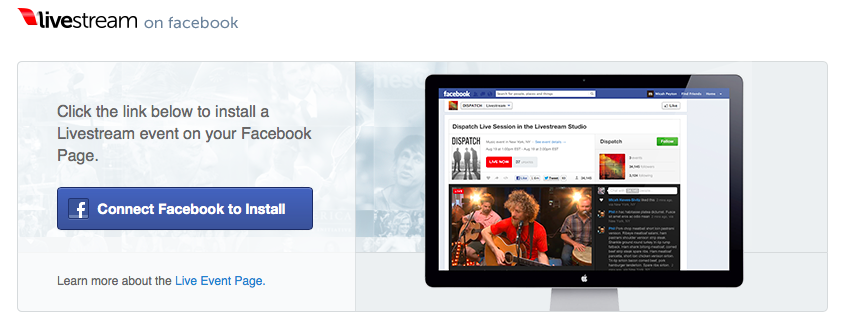
2. Livestream provides the ability to broadcast live to a wider Facebook Audience.  They announced recently the ability to install the app within your company Facebook page and then choose whether you want to broadcast from your smartphone or computer.  CFA Institute has been working with Livestream since I joined to broadcast high quality sessions from our global events to a wider audience.  We’ve got a channel full of broadcasts we’re always working to integrate these into our social media audience and raise visibility to a wider audience.

screen-shot-2016-11-18-at-3-32-28-pm

Once you’re live you’ll be able to engage viewers though comments and your users will have the opportunity to engage with each other providing an interactive broadcasting tool.  Following the end of your event your broadcast will continue to be available for people to find and engage with.  We’ll be integrating this into our 2016 Events Strategy and I will report back on how this works within our mix.

3. Click to Tweet: If you’ve visited by blog before (or have paid any attention to this post) you’ve already noticed I’ve included click to tweet buttons within a good amount of my content.  As a content producer my goal is to make it simple and easy for readers (like you!) to share my content across social media (and Twitter).  Click to Tweet is hands down the easiest way to promote, share, and track your content within Twitter.   You login and create the message you want tweeted including hashtags, handles, etc and it generates a basic link for you to paste into your content.  You can simply hyperlink the words click to tweet or develop a visual image to easily drive engagement.

click-to-tweet

We recently integrated this into one of our marketing campaigns within an email an saw almost 500 tweet from our click to tweet button in the email within the first 12 hours, a total success for our first try.  The free plan allows your five links with auto shortening and tracking and upgrades range from $5 monthly for unlimited links to $500 a year for an enterprise plan to manage multiple accounts (ideal for a business).


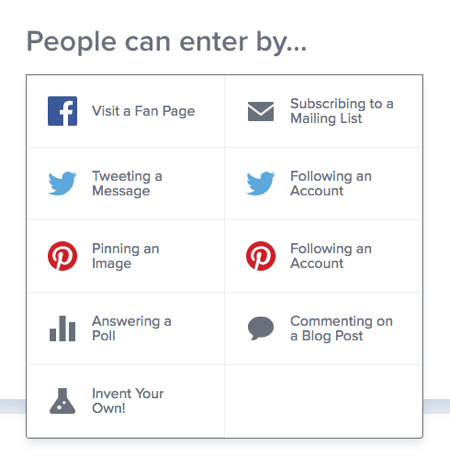
4. Rafflercopter: One of the tools I have my eye on to integrate into my social media marketing mix this year is Rafflecopter.  Social Media is all about engagement, and Rafflecopter provides an easy way for you to create a content to get people engaged with your account and build your following.  I’m a sucker for entering any raffle where I have a chance to win something (really, anything!) and this tool keeps popping up within my feeds! I see endless opportunities for brands and marketers to incorporate this into tool into their strategy to mix things up and make it fun.  Hey, after all everyone likes a chance to win something with 51% of US millennials would share information with companies in exchange for an incentive (USC Annenberg Center for the Digital Future). Click to Tweet.

It’s easy to get started, signing up takes a matter of seconds and once you’re logged in you can setup a giveaway within a few minutes.  You first choose your prize and decide how people can enter through numerous options (and yes, you can click more than one!).  Next you’ll setup a time parameter and set your contest live! They’ve got a free trial you can easily get started with, and it’s inexpensive to continue with their upgraded plans.

jk-rafflecopter-entry-options.png

5. Pablo by Buffer: The human brain processes images 60,000 times quicker than text and 90% of the information transmitted to the brain is visual.  Social Media Platforms and Images go hand and hand for success with research by Twitter sharing that adding a photo URL into your tweet can boost retweets by an impressive 35%. Click to Tweet.

Pablo by Buffer makes it easy to design engaging images for your social media channels within minutes.   The Buffer Blog (one of my favorite sources of content) has a post here about how to get started and integrate into your mix.

pablo-by-buffer

The tool provides ready to go templates, images, and quotes for you to use and it makes it fun to style you image adjusting your font or color, switching the photo from blurred to black and white, and adding a line of text or an icon in.  It also allows you to upload an image of your own to overlay with text.  We use this all the time during events to highlight speaker quotes in live time and drive engagement online.   Once you’ve developed your image you can easily share to your social channels, download, or add into your buffer scheduling matrix.  The only downside is they’re desktop only, hopefully a mobile version will come soon for those of us on the go, but to make life better, it’s completely free to use!

What do you think of the tools I’ve suggested? I would love to hear if they’ve helped you at all, and please take a moment and share your favorite tool with me within the comments or send me a tweet!

4 Tips for Building a Social Media Strategy for Your Personal Brand

This September I’ll be speaking with April Rudin during CFA Institute’s Alpha and Gender Diversity: The Competitive Edge Conference in Boston.  We’ll be delivering a pre-conference workshop on building a strong personal brand through social media.   In a nutshell social media is the crucial piece for managing and establishing your personal brand online. Not only is social media free it also provides accessible tools to communicate with infinite “niches” to fit into.  It allows us to stay hyper networked 24/7 while gaining instant access to information.  After our session in Boston we’ll be able to connect with conference delegates and stay in touch and continue conversations in live time.

Personal-Branding-via-Social-Media-1440x564_c.jpg

So, What Exactly is Personal Branding? Within Barry Feldman’s Blog Post he nailed it: You, my friend, are a brand. Therefore, personal branding is the process of managing and optimizing the way that you’re presented to others.  While self-help management techniques are about self -improvement, the personal branding concept suggests instead that success comes from self-packaging (i.e. You’re a brand. I’m a brand.  We’re all brands, whether we aim to be or not.)  

Below I’ve outlined a summary of our presentation sharing Four Tips for Building a Social Media Strategy for Your Personal Brand.

Tip #1: Determine Your Area of Expertise

Before you can establish your personal brand it’s important to determine what sets you apart from others.  The world of personal branding is flooded so you just can’t choose a general field like “marketing” or “social media.”  It’s more beneficial to focus on finding a specific niche so you’ll have an advantage to prove that you know what you’re talking about and stand out.  Although your audience might smaller, it will also be much more relevant. Your area of expertise should be something you’re authentically interested in.  After you determine your 1-3 areas of expertise it’s important to prioritize becoming a thought leader-producing content regularly and staying on topic and therefore gaining trust.   Before long you’ll have proof of your expertise!

Tip #2:  Remember that your digital reputation stays for life!  Treat it as if it were permanent

Sharing across social media will help draw others to you and help grow your personal brand.  Although social media can be overwhelming and confusing remember that it was initially setup as a forum to start conversations, providing the perfect forum to add value and drive engagement.  While it’s important to take a proactive approach to generating social media engagement by getting involved within your community.  However, be smart along the way and remember that so much depends on reputation- so you should guard it with your life.

It’s important to build a personal brand because it’s the only thing you’re going to have.  Your reputation online, and in the new business world is pretty much the game, so you’ve got to be a good person. You can’t hide anything, and more importantly, you’ve got to be out there at some level.- Gary Vaynerchuk

Gary Vaynerchuk stated it well, it’s important to remember that a reputation is your greatest asset follows you everywhere you go.  The web is permanent, and anything you say is etched into a digital presence that isn’t easily removed.  Being thoughtful in what you publish and engaging others tactfully goes a long way in positioning yourself in the right light.

Tip 3: Assume Everyone Can Help You

Think of being and influencer Like Being an intern, everyone MUST prove themselves.  As you work on building your social media footprint and generating engagement it’s important to remember to always respond and assume that your followers, fans and connections can help you.  Social Media 101 states that engagement and conversation always outweigh self-promotion.  It’s important to have an opinion, ask questions, and follow people back on social media (really…it’s okay!).  When you get unusual followers, specifically the good ones, always reach out with a personal comment/message.   I’ve been fortunate to amass a large social media footprint by actively participating in conversations within my community and taking time out of my day to retweet, share content, and engage with my followers.  Remember, social media has little to do with what we say about ourselves, and has everything to do with what people say about us.

Tip #4: Understand Exactly What NOT to Do on Social Media:

Although this may seem like a given, and I’ve covered some basics of what to do, it’s also important to address what NOT to do within social media.

  • Don’t complain about your job, co-workers or your boss (hint: see tip #2)
  • Don’t share too much information- think about how you can separate your digital & personal life
  • Don’t have an incomplete social media profile (if you’re not going to take the time to set it up then why bother keeping it active)
  • Don’t have an inappropriate, blurry, logo, or unprofessional photo (hint: a selfie or photo of you with drinks isn’t suited for your LinkedIn profile)
  • Don’t reference illegal activities- anything you wouldn’t do or say in front of a police officer shouldn’t go on social media!
  • Don’t be too self-serving or phony- remember You eventually become who you are who are on social media…You can only fake it for so long.  If you are a pain in real life, you will be a pain on social media. 

Conclusion: Hopefully these tips have been helpful in thinking about how you present yourself online. Establishing a personal brand on social media is something anyone can do, start small, stay focused, and drive engagement through your actions.  Social media is a powerful way to amplify your message, whatever that message may be, whatever the audience.

I would love to know which of these tips might work for you, leave a comment below or send me a tweet @marissapick.  As a reminder, you can follow the conversation online during CFA Institute’s Alpha and Gender Diversity: The Competitive Edge Conference September 14-15th by following the #CFAWomen hashtag.

Does Social Media Rule Publishing? #Yes.

The emergence of social media has had a tremendous impact of how digital news is produced, consumed, and specifically around how the journalists behind the stories are pressured to re approach and modify their craft.  This month, Edelman Media Network teamed up with two start ups NewsWhip and Much Rack and surveyed 250 working journalistsrevealing that more than three-quarters of them feel increased pressure to get their stories shared on social media.

This research revealed that:

  • More than 75% of journalists say they feel more pressure now to think about their story’s potential to get shared on social platforms.
  • To make their stories more shareable, journalists are infusing their stories with five key ingredients: video/images, brevity, localization, more use of human voice and a proximity to trending topics.
  • Nearly three-quarters of journalists are now creating original video content to accompany their stories. However, very few journalists (13%) are relying on sourcing consumer-generated video and only 3 percent are using corporate video.
  • Journalists see five key trends impacting their profession this year: more mobile friendly content, faster turnaround times, more original video, smaller newsroom staff and social media growing in influence.

Employers are becoming increasingly dependent on social media for traffic.  In September 2013 Shareaholic reported the eight biggest social referrers drove 16.4% of traffic to publishers’ sites, and a year later, that number had nearly doubled, to 29.5%.  As the study revealed, journalists are now feeling the pressure to write “sharable & digestible” stories surrounding topics which are already trending and focusing on ways to develop headlines which demand attention.

Journalists are also being called upon to leverage their individual social media profiles and adjust how they approach their stories to aide in getting the stories the most possible shares across social media.  82% of survey respondents said they use images to make stories more searchable (click to tweet).

It’s a fact that 90% of the information transmitted to the brain is visually based (click to tweet), and the human brains processes images 60,000 times faster than text, a stat which I often share when discussing leveraging visual content within social media.

It’s no surprise the facts revealed within the study, and how social media has redefined journalism and publishing.  As social media continues to become more prevalent many traditional media companies continue to struggle to keep up. Employers are becoming increasingly dependent on social media or traffic, and roles such as mine are here to help journalists, and the rest of the business stay up to speed with trends in social media.  I think the study shares some great stats,  and raises a great issue faced by journalists. What do you think? Please leave me a comment or tweet me your thoughts.