The Future of Content Marketing Appears Bright Moving Into 2022

The pandemic put content center stage, reminding many marketers that they must develop content that includes purpose, context, creativity, and integrity. To do so, content must add value and enhance the conversation with brands’ target audiences to facilitate engagement. It’s clear that people are looking for ways to be inspired and entertained, making it even more important for content marketers to find creative ways to connect with their audiences. 

Content Marketing Institute (CMI) and MarketingProfs released their 12th annual B2B Content Marketing Benchmarks, Budgets and Trends Report last month which portrays an encouraging and optimistic future ahead for content marketing. The research within the report confirmed what many of us already knew: content marketers are some of the fiercest business pros around. In the most difficult of times, they get the job done– and many come through more creative and stronger than before.

I wanted to break down some of the key themes highlighted in this report.

Video and Events Present Prime Opportunities for Engagement

Ninety percent of content marketers say that short articles and posts (such as blogs) have been within the mix this past year. That is followed by videos (66%), virtual events/webinars/online courses (64%) and case studies (61%). But which tactics produce the best results? Virtual events, webinars, and online courses were named by 58% of respondents as a top performer (including 66% of those categorized as “most successful”) and research reports and short articles/posts were tied for second at 48%.

B2B marketers remain at a critical inflection point as we prepare for the future of events. The pandemic rapidly accelerated the digitization of events, profoundly changing the live events industry as we knew it. I maintain that most events and conferences will remain virtual until the end of 2022, but agree that the opportunity for virtual events, webinars and online courses showcases the importance of virtual and hybrid events as a MUST next year.

Given the results of the survey it’s no surprise that the top two planned areas of investment for next year are video and events. It’s clear that content marketers are looking for ways to more immersive engagement with their audience within a fundamentally altered environment. The good news for content marketers is that there are several opportunities to keep virtual events as an integral part of fostering connection and engagement. 

Earlier this year I wrote an article for InEvent about the 6 Mistakes to Avoid When Planning Your Virtual Event which discussed the importance of developing great content. When you begin planning your virtual event, it’s important to remember that content is often viewed hand in hand within the overall program. That is why it’s so important to take the time to put together a cohesive look and feel and ensure you’ve outlined branding for your online event. Make sure that the content you develop promotes your speakers, sponsors, and every aspect of your program. Eye-catching and captivating promotional materials are key.

LinkedIn Remains King for Organic and Paid Social Media  

It’s no surprise that LinkedIn is the top social media platform to distribute both organic and paid B2B content. It’s a viable content marketing platforms and when content is relevant for the proper audience and complimentary to the features of LinkedIn it can really pay off in the end. 

B2B content marketers in this survey rated it as the most effective for both organic and paid social media. When it comes to producing results with paid social media, LinkedIn was ahead of the next-highest rated platform by 25 percentage points. For organic results, the chasm is even wider.

Overall, more than three-quarters of practitioners said their paid distribution spending has either increased or remained steady. Social media advertising and promoted posts were the most common paid distribution tactic (77%), beating out search engine marketing and pay-per-click (65%).

Content Marketing Budgets Are Rising

Although the pandemic brought a lot of businesses uncertainty, many haven’t pulled back their content marketing investments, which was at one point considered “discretionary” spending. Forty-three percent of respondents familiar with their organization’s spending said their content marketing budget increased in 2021 compared to 2020. Meanwhile, 66% say they expect their content marketing budget to grow in 2022. Very few saw decreases in budget this year or expect them next year.

The Top Marketing Challenge Ahead

Creating content which appeals to multi-level roles within the target audience and accessing subject matter experts to create content are still a major challenge. It may be because more marketers are leveraging content collaboration tools, or because so many people have been changing jobs over the last 18 months. 

This challenge can be compounded if content marketers only focus on creating content that appeals to those in the C-suite, as research from Netline Corporation shows that the vast majority of content consumption happens within roles outside the C-suite. Marketers must find relevant subject matter experts in 2022 to develop relatable content appealing to numerous roles within their target audience. 

I discussed the future of content generation on my blog and just like any other content marketing strategy, repackaging content is all about consistency. I recommend brands create 2-3 additional content assets whenever they publish a new article, such as developing a piece of audio content, adding a voice over, or turning a presentation into a video. Through videos, user generated content, and a variety of content types they can begin to home in on what content resonates most.

Despite the challenges of the recent past, it’s an exciting time to be a content marketer. With new approaches and channels to develop content and engage with audiences, refreshed budgets and agreement that content is king, it’s clear that there is a world of opportunity for B2B content marketers in 2022. 

The Future of Content Generation

If someone offered you a crystal ball that could tell you the future of content generation, would you want it?  As a member of The Upside, an award-winning community and accelerator for thriving consultants, I participated in a recent Clubhouse event discussing the future of content generation.  This got me thinking about trends for the remainder of this year and beyond.

Following an amazing discussion with Erin Halper, CEO of The Upside, and my colleagues Rebecca Orlov, Rachel Dorton, and Lisa Weiss, I asked my LinkedIn network to provide some tips and content marketing trends they were most excited about as we enter the second half of 2021.

As you begin planning your content marketing strategy for the remainder of this year, I encourage you to keep the below trends and tips in mind.  Overall, developing high-quality content that doesn’t necessarily require more resources was a major focus among the panelists. This can go a long way toward crushing key marketing objectives in 2021.

The Emergence of Audio Platforms

Back in April I wrote an article for Search Engine Watch on whether Clubhouse was really worth the hype.  Within the post I explored how brands can use Clubhouse to build an online community to further add value and drive engagement.  My key takeaway was that although it came onto the market at the right time, I’m cautious about its role over the long term.  As Twitter, LinkedIn, and other audio apps emerge Clubhouse will have to quickly adapt and make some changes if it wants to become a mainstream platform for brand marketers.

Although I remain interested and active on the platform, I’m cautious that it’s the “popular kids” hangout and the allure and interest is largely based around buzz.  Certainly, brands can and should listen into ongoing conversations and get ideas about the topics target audiences and tuning into and discussing.  The brands that listen openly to new ideas and have a pulse on the culture and content their market is exposed to will have a long-standing advantage and edge.

Margaret Molloy, the Global Chief Marketing Officer at Siegel+Gale added, “I expect to see more audio content from an evolution of live audio platforms including Twitter Spaces or Clubhouse as well as the expansion of podcasts.  The mobility and portability are so attractive as people recommence commuting or continue to do more exercise or even simply walking their dogs!”

Danielle Guzman, the Global Head of Social Media at Mercer added, “The rise of social audio will drive growth in a conversation-first approach to content.  Start with a conversation (aka social audio platforms) and use that conversation as fuel for your content plan, putting the experts (influencers, SMEs, employee advocates) at the center of your content strategy), and then when you activate on channels, those voices are amplified in content different formats.”

I agree with Danielle and Margaret that audio platforms offer a much-needed relief for the Zoom fatigue many of us experienced this year.  Although they are mobile friendly, they’re merely a part of a set of tools we must have within our pocket.  When used properly and effectively audio can be used to help achieve success for your brand.  The future of audio platforms seems bright, and it will be interesting to see how it all unfolds over time.

Explosion of Video Content

With major events out of play the for bulk of 2021, video and webinar content became even more important—and guess what, it’s not going away.  Consumers want to get information and learn quickly and there’s no better way to do that without video marketing.  Video is a quick and effective medium to communicate your message and educate your audience. Video content is on a seemingly never-ending rise around the world.

Cisco’s Annual Internet Report reported that video content is predicted to amount to a whopping 82% of all internet traffic.  Additionally, according to a HubSpot survey, over 54% of consumers would like to see more content from their brands.  It’s pretty clear that video is what we need to focus on in 2021!  

This isn’t to say you should ignore all other forms of content, but it does mean that video must be at the forefront of your strategy.  Sarah-Jane Manco, a marketing and communications senior professional within the financial services industry, added, “I see short form video sticking around for a lot longer.  Our attention spans are shortening thanks to social media, so condensing your message into a 15-30 second video is the way forward!”  

I couldn’t agree more and encourage brands and marketers to continue to develop short content to cut through the digital noise and amplify your story.  It’s important to use a variety of video formats to fit your brand, industry, and niche, and optimize them for every step of the customer’s journey.

The More Personal, the BETTER!

Personalization in 2021 goes beyond merely addressing your customer by their name in emails or when you’re talking to them via chat. In the years to come, technologies like artificial intelligence will make data analysis more efficient and effective, allowing you to achieve hyper-personalized communication.

Providing a stellar customer experience is no longer a “nice to have;” it’s now a true necessity. Customers expect and demand seamless and personalized experiences throughout their journey with your brand.  User-generated content (UGC) is a highly effective way of creating more connected relationships with customers, especially when leveraged across social media channels.    UGC provides an additional stream of content that is typically engaging, authentic and reflective of the overall brand promise.

Building Content Communities

Creators are now in the driver’s seat and users are in for the ride alongside them.  With the rise of Clubhouse offering authenticity through voice or Slack communities across tech, building communities has been a push for marketing teams for the remainder of the year.

However, building communities specifically around content sharing and creation will allow marketing teams to continue to expand their reach, even with fewer resources.

Expanding your reach is great for brand awareness—and, of course, your metrics—but that kind of inclusion is also good for fostering a sense of community with your audience, too.

Repackaging Content

One of the major threads within my LinkedIn post was the use of repurposing content. Repackaging content is nothing new, but the idea is to turn existing content into new formats.  Tom Pick, a B2B Tech Digital Marketing Consultant, added that he thinks “we’ll see more’ video first’ content creation.  Meaning, creators will start by recording an online video with an expert, maybe live, maybe not.  The audio will be repurposed as a podcast, and the transcript as a blog post (or more than one).  Then excerpts will be pulled from a string of these to create an expert roundup post.  It’s the next stage of repurposing.”

This idea of the future state of repurposed and repackaged content will allow for us to turn existing how-to articles into visual flowcharts or revise an article into a podcast or even a mini audiobook.  The main aspect of content repackaging is that a new content piece creates value of its own.  It’s not just about re-marketing your old content simply for additional clicks or conversions.  Content repackaging is the marketing tactic that aims to give your audience a new way to consume information.  It also involves expanding your own content with new research and up-to-date information.

April Rudin the Founder and CEO of the Rudin Group added, “Personalization and the opportunity to repurpose existing content is HUGE particularly for regulated industries like financial services and pharmaceutical, I’m a fan of infographics and data visuals to help tell stories in a snapshot. To me, video should be used sparingly and in short spurts, no one wants to watch lengthy videos or listen to long podcasts without visuals.

Meredith Bodgas, the Editorial Strategy Lead at Toptal, added, “Consider repackaging of existing content to match the different platforms on which you might not be using that content.”  What I love about Meredith’s advice is that it allows us to create new and unique content for a variety of social media channels. It lets us experiment with many content formats and identify our best-working engagement tactics. 

Like any other content marketing strategy, repackaging content is all about consistency.  I recommend brands create 2-3 additional content assets whenever they publish a new article.  Consider using some of the advice within this article, such as developing a piece of audio content, adding a voice over or turning a presentation into a video. 

A good rule of thumb according to Singlegrain is that we should be spending 20% of our time on content creation and 80% on content promotion.  They offer some great tips within the article about the basics of promotion and the foundation of developing GOOD content.  Remember, content is king, and will continue to be for many years to come.

What else would you add to what’s in store for the future of content generation?  Leave a comment below or send me a tweet @marissapick


USA Today Feature: Future of Virtual & Hybrid Events Campaign

I’m excited to be a parter with Mediaplanet for their Future of Virtual and Hybrid Events campaign which launched this week. The event planning industry has gone through what was probably the most difficult year in its history, but event planners are primed to make a major comeback.

You can learn more about the tools and resources to make your next virtual/hybrid meeting or event a smashing success by picking up a copy of the campaign in USA Today. The virtual campaign can be found online by visiting the website.

I’m a firm believer that virtual conferences of the past year have had a positive impact. The digital events have enabled more people to attend virtually. Many of these events have been free, with participants paying a small fee to access slides, if they choose.  My article for the campaign outlines, How Virtual and Hybrid Events Are Helping the Events Industry Thrive Post-Pandemic.

Hybrid events have allowed brands to have an extended impact, helping them reach a broader audience and drive deeper engagement online. Plus, by developing content and deeper connections with speakers and attendees from virtual events, brands can stand out and have higher retention.

Now’s the time to use digital event platforms to connect audiences and build longer-lasting relationships. Within the article I shared some of my favorite platforms, including Brella, which offers custom, one-to-one meetings, as well as live streaming; and Hopin, which provides webinar sessions, chats and polls, and interactive elements that can be fully customizable and brandable. 

I believe brands must refocus their goals and understand why people will attend the event, whether it’s virtual or in-person. For example, is it for lead generation to drive sales? Content marketing? Engagement? This will allow companies or event producers to refine how they’re doing things, and consider how they might be able to — whether it’s driving sales or driving engagement — mix up and shake up what works and what doesn’t.

Let me know what you think of my article within the campaign. I’d love to hear how you think virtual and hybrid events are helping the events industry thrive post-pandemic. Leave a comment below or send me a tweet with your thoughts.

6 Tips for Responding to Negative Reviews on Social Media

The Below is a Guest Post from Mark Lindsay who is a writer and marketing executive with over 20 years of experience working in the industry. He contributes to several digital and print publications on topics related to work and life. He lives in New York. The original article below was originally published at Enplug.com

Have you ever been the target of a negative comment on social media or the recipient of a review that’s less than stellar? If so, you’re not alone. Many small businesses are encountering this problem, especially considering how many customers currently use social platforms to voice their opinions.

Since you can’t simply delete negative comments on social media, though, you’ve got to focus on what you can do: Respond to them effectively. Read on for six helpful tips.

6 Social Media Tips for Responding to Negative Reviews

1. Understand the Comment

Customers posting negative comments on social media tend to ramble. It might take you a few minutes to scan through a given comment to mine the essential grievance. Take some time to find out exactly what your customers are dissatisfied with — because you can’t come up with a resolution until you do.

2. Respond Quickly

If you aren’t personally responsible for monitoring your social media accounts, make sure someone in your organization is charged with the task. Negative comments hanging out there with no response can quickly damage your brand. The ultimate goal should be to respond in one business day or less, as long as you can do so professionally.

Customers can share negative and positive reviews in an instant – and they expect a response just as quickly.

3. Never Respond With a Negative Comment

If a comment or review is especially derogatory, it’s only natural for you to want to defend your brand by instinctively adopting the same tone. However, dropping down to a negative level is not going to produce positive results. In fact, it’s only going to make you look insensitive, regardless of whether or not it’s justified.

No matter how you decide to address each issue, keep tact and respect on your radar at all times.

4. Explicitly Ask Customers What They Want

This is a step that many businesses fail to take when responding to negative comments. There’s nothing wrong with coming out and expressly asking dissatisfied clients what they’re after. In a lot of cases, there’s no refund or monetary investment involved — customers just want to know their comments were received and had a positive effect.

5. Don’t Delete Them

The last thing you want to do is delete comments or reviews that shine a negative light on your business. Think about it from a consumer’s perspective. If you check out a retailer’s Facebook page and find 100 comments that are nothing but positive, you might get a little suspicious.

Instead, leave the bad comments there, but be sure to craft stellar responses to all of them. This way your current customers — and any potential new ones — know you’re serious about providing high-quality customer service.

For customer service to be the best it needs to continue online even after your customer has left the store.

6. Go Over the Top

If you run a solid operation, you probably don’t get an overwhelming number of negative reviews over social media. Because of that, feel free to overcompensate when you do. For example, if you ship an order incorrectly, refund the full amount plus return shipping charges and an additional 10% of the purchase price — and mention that you did so in your thread.

If your customers just want to be heard, throw them a modest gift card as a gesture of goodwill. This is a great marketing opportunity for your business as it shows you’re willing to do whatever it takes to correct any errors.

Final Thoughts

In general, to avoid negative comments on social media, you should review, and if necessary, revamp your customer service policies. Monitor your team in action, conduct meetings devoted solely to customer service, and make sure your entire staff is well-trained.

Properly responding to negative comments on social media is important, but doing what you can to reduce them is equally essential.

What other strategies do you know of for effectively responding to negative comments on social media? Leave a comment below.

Social Media Tips for Small Businesses to Ensure Success In 2021.

Social media has become an integral part of everyday life. In fact, many people spend a large part of their day exploring various social media channels. A study from Globalwebinex showed, on average, people spend three hours a day on social networks and messaging.  Given the prevalence of social media, it’s no surprise that marketers and businesses flock to these channels hoping to connect with their target customers.

As social media is becoming more integrated into our lives it provides countless opportunities for businesses looking to reach their audience through various initiatives. That being said, it can be challenging for small businesses to stand out given the massive content overload on social media channels.  Small businesses don’t have the budgets to compete with big brands, who are pumping millions of dollars into paid advertising to promote their products and campaigns. For small businesses to succeed, it’s important to bring social media back to the foundation of what it aims to do, engage.   Having a clear and engaging social media marketing strategy can help small businesses succeed into 2021 and beyond.

I spoke with Clay McDaniel, CEO of  Ripl Inc. regarding social media for small businesses to succeed.   Since many small businesses often can’t afford a social media manager, or don’t have team members with knowledge of how to develop social media content they often look to implement a third-party tool to support their content management needs.  I’ve worked with my fair share of social media tools throughout my career and have been impressed with Ripl Inc.

Clay explained that “With Ripl, anybody can easily manage the social media presence of their business. For about the same price as a lunchtime sandwich per month, you can have thousands of customizable templates available to your company with over 500,000 high-quality images and 90,000 videos at your disposal. You can quickly create trackable professional-grade content and schedule to share it across channels in minutes instead of hours.”

Clay shared several key pieces of advice for small business owners to consider for social media success this January.

  1. Consider focusing on a “hero” social platform. If you feel like you’re spread too thin tying to manage all of your social channels, see if one is performing much better than the others and focus your energies there. Some channels don’t make as much sense for certain types of businesses. Visual platforms like Instagram often benefit retailers, while Twitter can be beneficial for sharing news and managing customer service.
  2. Understand Your Customer – Small businesses often can’t afford to do mass marketing, so you need to make sure your social media activity is pinpointed to your customers’ needs. Spend the time to really personify your customer and what will speak to them and that will help as you develop new content throughout the month and year.
  3. Set goals for your social pages – Having a page just to have a page isn’t the best strategy, so set some measurable goals so you know what’s working and not. Perhaps that means brainstorming new types of content, posting more often or at more regular intervals, or doing more community management on your social media channels.
  4. Add a call-to-action button– This button sits just under your cover photo on your Facebook business page and can be added to Instagram, as well. Make sure it fits your business so potential customers can engage immediately to “Shop now,” “Book now,” “Sign up” and more.
  5. Delete or archive old content – Comb through your past Instagram posts and Twitter tweets and decide if any are outdated or no longer applicable to your business. Go through each of your story highlights at the top of your Instagram feed and remove outdated content…and if you’re not yet using Instagram stories for your business, you should start. This is a great way to keep important content indefinitely since highlights last forever while stories only last 24 hours on the platform. Be sure to also go through your past tweets to determine if there are any that might spark controversy or seem tone deaf and delete those, as well. 

COVID-19 has been a game changer for small businesses both within the United States and across the world.  Facing financial constraints and major limitations imposed by the pandemic has resulted in the need for many small businesses to pivot and come up with innovative solutions to reach their customers in order to survive (and hopefully thrive!).

The advice Clay shares above is crucial for small businesses to succeed on social media channels.   Small businesses have one major advantage over big corporations in my opinion, they can be nimble and seize opportunity.  The ability for a small business to lean in and adapt social media channels in order to evolve in a rapidly changing world is key.

What additional social media tips would you give for small businesses to ensure their success into 2021?

Please take a moment and leave a comment below!

The Biggest Trends in Event Technology for 2020 (G2 Planet)

This week G2 Planet and my colleague Tom Pick published an article entitled The Biggest Trends in Event Technology for 2020 — Per 10 Top Events Experts.  I’m thrilled that my insight was included as one of the event experts within the post.  My “expert” opinion is that as we enter 2020, data will still remain king and crucial for ongoing event success.   I also think personalization is crucial to enhance the overall event experience.  

The article found that the biggest event technology trend is the use of integrated and aggregated data, bringing together information from multiple devices, event apps, event management platforms, social media, and back-end systems like CRM applications (which is, incidentally, exactly what the G2Planet platform was been built for) to give event professionals a holistic view of what’s happening to support data-driven decisions at both the operational and strategic levels.

Check out the full article to see the insights from the other event professionals included.  Below is the insight I shared within the post:

Data remains top-of-mind and crucial for event success into 2020.  Successful companies are using analytics tools such as social listening, mobile apps, lead generation, and more to better meet the needs of their clients and personalize and improve the overall experience.

Pre- and post-event surveys are helpful to collect data and suggestions to help shape the agenda, collect feedback, and more, but successful companies will capture data in real time. 

76073_588388382899_624391_n

Geolocation data can help to personalize the event experience by highlighting activities attendees can check out nearby, alleviate overcrowding and event bottlenecking within specific spaces, send push notifications, collect input and more. 

In the past I’ve used technology to collect responses from attendees in real time and develop custom graphics for our social media channels to collect our onsite and virtual audiences.  Numerous technologies allow delegates to respond in real time and engage with the event to gamify the experience while providing insight to help shape their experience.  Personalizing the event experience is key for success and can help to solve real-time event problems and create a memorable experience for delegates. 

As a reminder, this is just a sample and I encourage you to check out the full article by visiting the following link.

What do YOU think the biggest trends will be in event technology into 2020.  Leave a comment below.

Using Google tools to understand your audience

Guest Post: Understanding Your Customers by Jenna Hegarty – Adtaxi

As digital advertisers, we are constantly trying to determine the optimal targeting for our SEM efforts. Understanding your customer personas, the profiles that represent your ideal customers, will help you tailor your digital marketing efforts and set your campaign targeting effectively.

While there are a handful of methods you can use to understand your customer base, including market research, surveys, polls, and social listening, one of the best ways is to dive into your site & campaign analytics. Google offers two tools that can help you quickly understand your audience: Google Analytics & Google Ads Audience Insights.

Using Google Analytics for Audience Research

Google Analytics is a rich source of information about your customers. You can see where your site visitors came from, which terms they searched to find you, how much time they spent on the site & more. You can also find valuable information on your customers’ interests, age, gender, location and even which device & browser they used.

Audience Reports in GA

Google Analytics Audience Reports give detailed information about who visited your site. Audience Reports contains over 15 subsections, but we will focus on Demographics & Interests here.

The Demographics report gives you insight into the age and gender of your site visitors, and each demographic group’s behavior on the site. The overview gives you a high level demographic breakdown of users by age and gender, and you can toggle through other key metrics like sessions, bounce rate, and session duration as well. The Age & Gender reports give a more granular look at each age group’s or gender’s behavior on your site, including bounce rate, pages per session, duration, and goal completion.

The Interest report in turn gives you a psychographic view of your audience. Google Analytics segments interests into three categories: Affinity, In-Market, and Other. Affinity includes users with a more general interest in topics, such as “Cooking Enthusiasts” or “Travel Buffs.” In-Market includes those users at the bottom of the funnel who are ready to convert, with more specific segments like “Home Decor” and “Hotel & Accommodations.” Other categories is similar to Affinity, but provides a more granular view, for example “Home & Garden/Bed & Bath/Bedroom/Bedding & Bed Linens.” Like the Demographic overview above, the Interests overview breaks down key metrics by each of the top ten interests in each category, and you can drill down into each category’s report acquisition, behavior, and conversion metrics.

Understanding the demographic & psychographic composition of your customers will not only ensure your campaign settings target the users with the highest conversion or goal completion rates, but also inform the creative, ad copy, and overall messaging of your marketing efforts. These reports can also help you gauge whether your campaigns are, in fact, sending the right visitors to your site. You can even use age, gender, and interest segments to create remarketing audiences to use in Google Ads.

Using Google Ads Audience Insights for Audience Research

The Google Ads audience insights tool helps you learn about who your converters and website visitors are, as well as find new audiences to target. Audience Insights is housed in the Shared Library under the Audience Manager.

Google Ads Audience Insights report

The Audience Insights report is a valuable resource for determining where, when, and to whom you should be advertising your products or services to drive conversions for your Gmail, YouTube, & display campaigns, and can also help you choose more relevant keywords & messaging to implement in your search campaigns, set bids, and more. Audience Insights benchmarks your website visitors against the United States on demographics, location, devices and interests. For example, the traffic for one of our clients in home goods retail is 66% more likely to be female and between 35 to 54 years old, 42% more likely to be parents, and 76% more likely to be visiting from a computer than the general US population. We also know that our visitors are 10.3x more likely to be in-market for “Kitchen & Bathroom Counters” and 3.2x more likely to be “Beach Bound Travelers.” Armed with your customer persona, you can leverage your findings and refine your paid media strategy to drive high-value traffic to your site.

Once you’ve created your customer persona, continue to periodically review your data in Google Analytics & Google Ads. Buying habits & preferences can change over time, so it’s important to reevaluate and recreate your personas especially if you’ve gone through new product launches or industry changes.

********

Adtaxi is a client-centric digital organization that brings scale, precision, and sophistication to digital marketing. Leveraging the belief that people matter as much as technology, we help advertisers solve complex marketing challenges with custom, performance-driven solutions. Adtaxi just recently won Digiday’s Worklife Award for Most Passionate Employees at an agency!

The Future of The Micro vs. Mega Influencer – Why User Generated Content is Poised to Win for Businesses

Guest Post from Matt Gibbs, Co-founder and CMO of UPshow

Millennials and GenZ might be the curated selfie generation, but a shift is happening, and businesses are taking notice. The cultural pendulum is swaying away from brand-sponsored mega-influencer-celebrity-endorsed posts to organic content that’s generated by people you know, or even those you feel like you know. Capturing more natural moments and promoting them within a more intimate circle of followers versus big ‘on the main stage’ posts is what’s now in-vogue. An industry 2018 Trust Barometer Report revealed that 60 percent of people no longer trusted social media and reported that immediate friends and family are better for recommendations than influencers.

That said, Kylie Jenner-esque paid posts aren’t going away, but they have become tarnished, and millennials and their younger counterparts are gravitating towards more natural interactions from those within their inner circle or for relatable micro-influencers. As a result, more brands are gravitating toward user-generated content to increase engagement and build trust and community.

According to a study, 56 percent of consumers are more likely to buy a product that they’ve seen in real-life images posted by another consumer – a shift away from the rainbow-colored preplanned photos that dominated platforms like Instagram in late 2017.

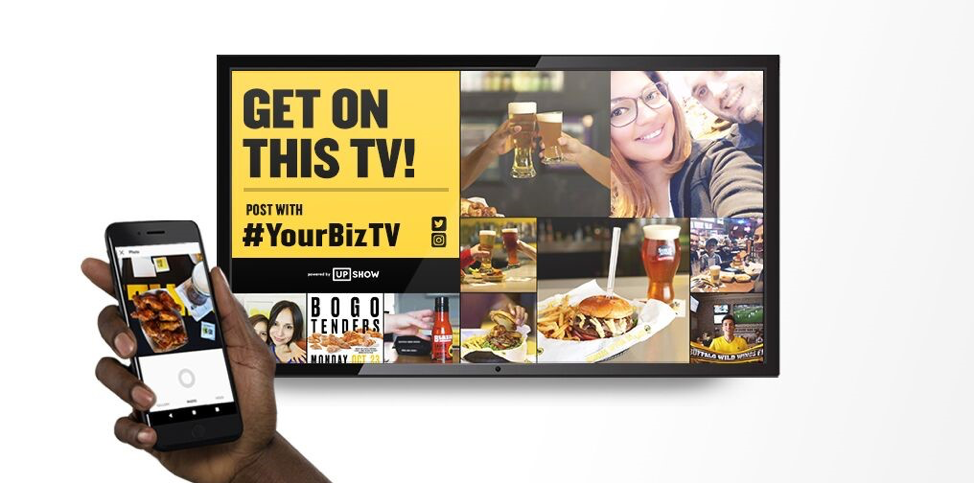
UPshow, the company I co-founded, is a social TV platform that companies such as Crunch Fitness, Cheddar’s Scratch Kitchen and ATI Physical Therapy are using to transform their customers into immediate influencers.  The platform entices customers to post on social media by projecting them on big screens in-venue. As a result, friends and family, also see and are often influenced by the posts. The content and choice to participate is totally in the hands of the consumer.

Upshow.png

Other companies also provide services that cater to this trend, such as Guest Crew and Woobox.  Their platforms harness user-generated content and boost it organically. Guest Crew leverages a community of organically generated influencers and Woobox turns user-generated content into contests.  Filtergrade uses professional photo grade filters (such as Adobe Lightroom presets) to help brands generate more professional quality shareable images that are unique and micro-influencers can use them too to make their posts mimic celebrity influencer quality.

It’s a new era for user-generated content and if brands want to appeal to younger audiences, such as millennials and GenZ, they need to embrace the social media trends that will improve their engagement rates by putting the power in the hands of the consumer in a genuine way.  

********

Matt Gibbs is co-founder and Chief Marketing Officer of UPshow, a consumer engagement platform that transforms a business’s existing TVs into its top marketing assets.  Gibbs is responsible for branding, lead generation and advertising for the

matt.png

company. Gibbs is a genuine entrepreneur and trailblazer in digital media with deep roots in the Chicago start-up community. Along with college friend and UPshow CEOAdam Hirsen, Gibbs co-founded SparkReel in 2011. SparkReel created a more efficient way for friends and family to share mobile videos online and evolved into a social media agency that created user-generated content campaigns for Verizon, Oreo, Condé Nast, Apartments.com, among others. UPshow was born out of SparkReel when customers wanted social media engagement screens at events. Gibbs graduated from Miami University of Ohio and resides in Chicago, IL with his wife, two children and corgi.

Honored to Be Named as One of the Top 19 B2B Marketers To Follow In 2019

I’m thrilled to announce that last month the team from B2B Marketing Exchange included me within their list of 19 B2B Marketers To Follow In 2019.

These influential marketing professionals specialize in areas such as ABMinfluencer marketingdigital marketing and more. I’m honored to be included alongside 18 such influential and powerful icons within this list. 

blog-header-19-for-19-o5s70bdktwirll2ixhlfi29e8hqe6y62e2k4jodk60.jpg

On a personal note, this has been quite a transformative year for me.  I left my full time role last fall to dip my toes into the world of entrepreneurship and setup my own marketing consultancy, Marissa Pick Consulting.    It’s been several months since I made the change and I’m enjoying getting my hands dirty developing marketing strategies, content marketing campaigns as well as expanding my work across new fields and alongside some fabulous clients which I’ve thoroughly enjoyed.

Who knows what lies ahead but i’ve learned to enjoy every day and moment including sharing honors like this! Thank you again for the team at B2B Marketing Exchange for including me within your list of 19 B2B Marketers To Follow In 2019.


10 SIMPLE & EFFECTIVE THINGS TO TRY WITHIN SOCIAL MEDIA THIS YEAR FOR ONGOING SUCCESS

I’m thrilled to share a post from one of my oldest colleaguesDhariana Lozano. I’ve worked with Dhariana for over ten years and she has grown to be one of the most influential social media and digital marketers within the industry.  She has setup her own agency Supremacy Marketing and often published posts on her blog as well as many industry channels.

Each week Dhariana runs a segment known as #CoffeeWithDhari on her Instagram live stream.  Within the livestream she promised her viewers a list of simple and effective things to try on social media within 2019.  You can read the below repurposed post below or by visiting her blog as well.

DhariLo-Social-Media-Marketing-Tip-214-10-Simple-Effective-New-Things-To-Try-On-Social-Media-In-2019

10 Simple & Effective New Things to Try on Social Media in 2019 for Success 

  1. Ephemeral content

I think disappearing content or content that is only temporarily available will be big in 2019. It will give followers an extra reason to follow your brand on the particular social media network you’re publishing this kind of content on so they don’t miss out. We’ll discuss a few of these content forms in this post.

  1. Live videos

Live videos will not slow down in social media in 2019 and tie into ephemeral content forms we just talked about. Live videos really let your followers see more of who your brand is behind the scenes. Their unscripted nature add a different element that can contrast a curated feed. They are a great way to “humanize” you brand and drive live engagement with your audience. Live videos can also be repurposed for content later on.

  1. Videos/Vertical video

Speaking of videos, I think vertical videos will become more popular on social media in 2019. We naturally hold our phones vertically and with the popularity of Instagram Stories and the introduction of IGTV I think there might be more of a shift to create vertical content.

  1. Instagram stories

Keep going with those Instagram Stories! I don’t know about you but I’m spending a good amount of time scrolling through stories as opposed to going to the accounts of the people or brands that I follow. While we’re chatting about Instagram stories I think you should make use of the countdown sticker. I just had to bring this one up because I love! It’s a great way to remind people of what’s happening. I’ve been using them to remind my followers of my weekly #CoffeeWithDhari live story segment.

A little bonus here: I think giving Facebook Stories a shot may be worth it. You can repurpose your Instagram Stories.

  1. Influencer marketing (mainly micro influencers)

The influencer marketing world is shifting. I think in 2019 more focus will be placed on micro-influencers. Micro influencers are people with smaller followings (think 10k). These influencers may have a more engaged audience than some of the bigger guys.

  1. Showing more personality

Getting more personal will be a differentiating factor for brands on social media in 2019. In the crowded space of social media marketing, being laser focused will yield more results than trying to appeal to the masses. I predict brands will continue to get personal and get behind specific social and even political causes. Not to0 long ago brands wouldn’t touch issues like this – so it’s refreshing to see the turn around. Just like in life, your personality will attract the people you’re friends with. Showing more personality is also helpful in creating more engaging content on social media.

  1. The death of vanity metrics

I predict (and hope) that 2019 will bring the end of the concentration of vanity metrics on social media marketing. I mentioned this a little in my latest #CoffeeWithDhari session. In the new year I think there will be a stronger emphasis on engagement as opposed to paying attention to follower numbers. Likes may even be weighed more lightly. This is because with the decline in reach, making the most out of the audience you have, and reaching more of the audience you already have will have a bigger impact than just simply gathering likes.

  1. Chatbots, 1-1 messaging

Have you interacted with a chat bot yet? The potential for brands using chatbots is immense. I ordered some items online and was able to get tracking info and updates right on Facebook Messenger. This should be a great aid to customer service. Definitely something to think about going into the new year.

  1. LinkedIn

LinkedIn has been an all time favorite of mine. I think people and brands alike are starting to see the importance and potential of LinkedIn. The originators of the Groups feature – LinkedIn has been a place to gain super targeted and high value leads. LinkedIn has been revamping itself in the past few years and I think more people will be exploring the possibilities on this network in 2019.

  1. Social media ads

Last but not least, and somewhat unfortunately, I think social media ads will be big in 2019. With all the saturation going on, the only way to break through may be to pay to play.

Social media marketing is an ever changing landscape. Just like you change over time, social media changes from day to day. 2018 has been filled with so many new features and innovations and I can’t  wait to see where we will go in 2019. No matter what changes, just know that one thing will not – and that is the power of a strong social media strategy. I am looking forward to relaunching Building Your Brand On Social Media in early 2019! For now you can keep track of your own social strategy with my handy social media strategy checklist.

To view the full article please visit Dhariana’s Blog and subscribe today to receive her notifications. Leave a comment and let me know if you have any recommendations of what you’re looking to try within 2019.