Four Trends Marketers Shouldn’t Ignore

Are you wondering what you should be keeping an eye out in 2016? Look no further, within this post I share key findings from recently published reports from PulsePoint and PageFair and Adobe highlighting key trends and stats marketers can’t afford to ignore.

1. Content Marketing is King!

If you’re vaguely familiar with Content Marketing you’ve heard heard the term “Content Is King.”  A report published by PulsePoint found that by 2017 content marketing budgets are projected to double, and 83% of marketers believe content marketing will go “programatic” by 2017. (Click to Tweet)

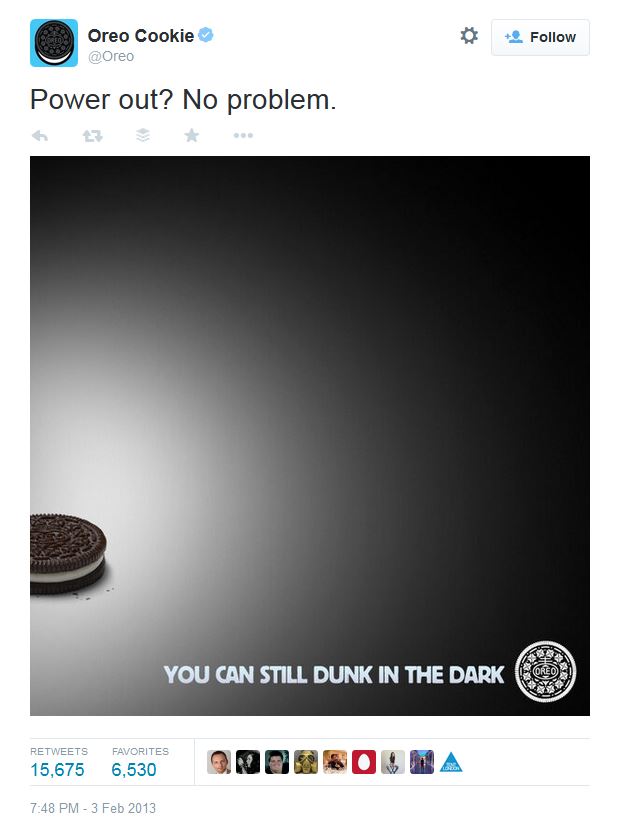
When most of us think about real-time content marketing, we think of examples like Oreo’s tweet during the 2013 Super Bowl blackout, when they advised customers that they “can still dunk in the dark.” That tweet was a great response to an unexpected occasion and the birth of the awareness of real time content marketing.

oreo-dunk-in-the-dark

Keep in mind that real-time content does not always have to be spontaneous. The majority of real-time content advertising and marketing can be prepared to some level by maintaining a close eye on preparing and trending topics material that replies to a broad range of scenarios.  Brand who are setup with strong content marketing strategies will rapidly set themselves apart and cut through the noise and “win” within this arena.

2.  Content marketing and native growth will outpace display and search

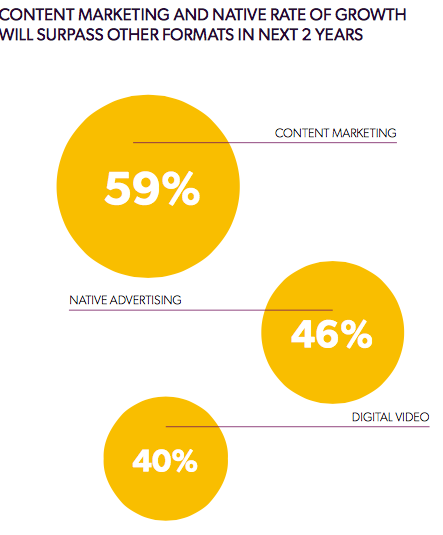
Brands, agencies and publishers reported that content marketing and native are both important to their organizations and strategies. But are the ad dollars and digital inventory available to back them? The answer is yes as both supply and demand are expected to grow over the next two years.

Screen Shot 2016-02-12 at 12.34.02 PM

While display and search still command most of the ad dollars, 37% of respondents to PulsePoint’s study named content marketing as one of the largest spending buckets.  That gap is only set to narrow, as content marketing and native ads both are both projected to see increased budgets over the next two years. The other format tracking slightly behind is digital video since the formal draws a higher audience engagement which is pivotal for brands with upper funnel campaign objectives.


3. Ad Blocking Is Rapidly Expanding, and Costing Publishers Billions of Dollars.

The number of consumers using ad blocking software worldwide has increased 41% year-on-year to 198 million monthly active users according to a report by PageFair and Adobe. (Click to Tweet)

Ad blocking is increasingly a challenge to marketers and it’s estimated that the click-through rate across all ad formats and placements is only 0.06 per cent.  Now users are able to be more discretionary than ever about which content they want and what they don’t.

screenshot 2015-08-10 at 09.04.09.png


Currently ad blocking almost always happens via desktop computers, however ad blocking on mobile could soon become a mainstream phenomenon.

The rate of ad blocking varies country by country. The US has an estimated 45 million monthly active ad block users, up 48% year-on-year which across  Europe, 35% of the internet population (77 million users) used an ad blocker at least once a month.  The report also found that ad block users are usually young and technically savvy and predominantly male.

4. Mobile Emailing Marketing Remains in The Mix

Email is a channel which can’t be ignored however with the rise of wearable technology and mobile marketers must work towards firming up their email marketing strategy.

A study from Moveable Ink found that in the first quarter of 2015, 67% of all U.S. email opens occurred on a mobile device  and 75% of those were smartphones. (Click to Tweet)

The growth in mobile is staggering and the shift is undeniable as tablets and wearables are now being dubbed the “new inbox.” Marketers must ensure their messaging is “mobile friendly,” personalized, and optimized for success.

What trends do you think Marketers should watch into 2016, leave a comment below or send me a tweet.  

Three Social Media Marketing Myths Debunked

Social Media is similar to Pandora’s Box.  It holds powerful tools which can help boost your business to new customers, retain loyal ones, and help to engage online within the digital world, or if can be a ton of wasted resources if not used properly.  Along with anything new comes a lot of misconceptions.  Although you maybe questioning the most efficient ways to maximize social media with your audience, don’t give up! Here are three major myths I come across which I’d like to take a stab at debunking.

Myth #1: I Don’t Have Enough Content to Fill my Social Media Feeds 

Social media outlets are fast paced and constantly changing.  Content gets posted online, flooded, pushed down, and becomes irrelevant quickly and before you know it.  Although this may seem like a wasted effort it reminds us that it’s important to repost the same content in different ways to best represent your brand.  Getting creative and thinking of interesting and exciting ways to share your content while avoiding making it seem too repetitive is important.  People often miss things, forget them, and if it’s evergreen content, then it’s always useful.  Putting a new spin and angle on how you repost it will help it live long and prosper. One of my favorite tools is pablo by buffer or canva, both can help quickly create visual content to accompany your content, and did I mention they’re both FREE.  Remember, the human brain processes images 60,000 times faster than text (click to tweet this) so visual content within social media is a MUST if you want to stand out and drive engagement!

Myth #2: My Social Media Channels Can’t Show Personality

Although your content should be targeted around your industry and demographic to best optimize, don’t be afraid to show personality.  Behind your brand you’ve got REAL people following you and engaging online.  Even if it doesn’t directly relate to your brand, product, or service spreading some humor can help to humanize your brand’s message.  We’ve found quotes, funny gifs, and office photos and interesting news articles helpful at CFA Institute.  Have a little fun, let your hair down, and get creative with your social media posts!

Myth #3: My Demographic Is Older, So Social Media Isn’t Relevant or Worth It

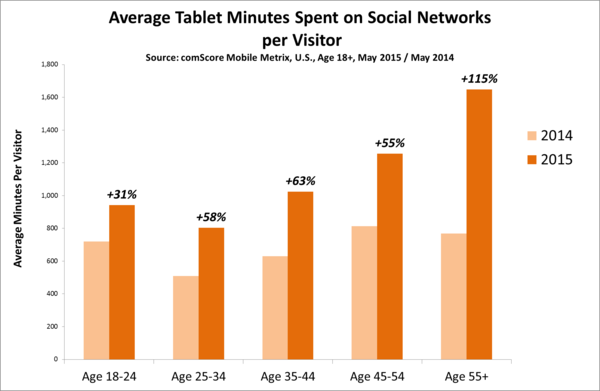
Contrary to what you believe, the older crowd is quite active on social media.  According to comScore Mobile Matrix the average tablet minutes spent on social networks per visitor is up 115% from 2015 in the 55+ age bracket.   According to FastCompany the fastest growing demographic on twitter is the 55-64 year age bracket (click to tweet this).  This demographic has grown 79% since 2012. For Facebook this group has jumped 46%, for Google+ 56%.

average-tablet-minutes-spent_reference

Not broadening your brand to reach an older age group, or ignoring their presence on social media outlets will severely limit your company’s potential for growth.

What do you think of these three myths debunked? Would love to hear your thoughts, leave a comment below or send me a tweet, thanks!

Authority, Impact, and the Future of Influence Marketing

Influencer marketing is the most powerful tool in getting a brand’s message to an interested audience in a relevant and authentic way. Whether launching a new product or just trying to raise brand awareness, it’s effective in driving engagement, visibility,quality traffic, and more. Last week I spoke at ClickZ Live New York on Authority, Impact, and the Future of Influence Marketing.

The future of influence marketing is up and coming as marketers are trying to hone in on how to develop relationships with key influencers with hopes to lift awareness of their brands. It’s not enough to market through influencers, now it’s crucial to find a way to collaborate in partnerships with influencers.

Within my speech I discussed the four rules of influencer marketing:

1) Popularity Does NOT Equal influence.

2) To be influential, a person has to be actively writing on topics which matter to your audience.

3) To be influential, a person has to have authority.

4) Influencer’s drive action.

Platforms like Instagram and YouTube have led to the rise of a new generation of influencers that have amassed huge followings on niche subject matters. A research study by Nielsen showed that buyers trust experts and influencers over branded content. It’s important start a campaign with a precise set of goals, and understand the purpose of your influencer outreach plan.  Whether its to get them to be a brand advice, guest blog, or vouch for your brand you must begin by defining concise targets and have various KPI’s for various social media networks.

So how can you find Influencers? Great Question, here are some of my favorite (and free!) tools:

1) Follower Wonk Enables you to find, analyze, and optimize for social growth, and search bios of those influencers you’re after (especially very niche topics!).

2) Twitter provides free analytics which outlines top followers, influencers, and also gives a nice overview of your impressions, mentions, and more.  I also find using twitter lists to be an excellent way to tap into and influencer and “digest” twitter in a more streamlined manner.

3) BuzzSumo allows you to find the most shared content and see what content performs best, as well as discover key influencers.

4) Topsy is one of my favorite tools to search all tweets and measure social trends, but they’ve also got an influencer option which has proven quite helpful.

5) Klout is the original tool to rank influencers based upon social networks and reach, they’ve started a content first approach, but hey, I still get free perks, and i’m still a fan!

Once you’ve found your influencers it’s important to get closer and engage with them using social media.  Being socially active you’ll be one step closer to your influential audience.  When reaching out to an influencer you’ve got to recruit, initialize and grow your relationship, and then nurture. Make sure your outreach is relevant.  Taking time to research your target influencers interests, and understand who they are and what they like is crucial.  Engage on social media by sharing an article, providing an opinion, and engaging when them in conversation without an ask. Once you’ve built your initial conversation pitch free it’s important to reach out offline to discuss next steps, and if possible remind them of your discussion and engagement to spark the conversation.

My slideshare from ClickZ Live is below, and remember Jay Baer’s quote, “Content is fire. Social Media is Gasoline.” When done right tapping into this new generation of influencers can put your brand on the map, increase traffic, engagement, and so much more.

What do you think of the presentation, send me a tweet @MarissaPick, or leave a comment below.

Does Social Media Rule Publishing? #Yes.

The emergence of social media has had a tremendous impact of how digital news is produced, consumed, and specifically around how the journalists behind the stories are pressured to re approach and modify their craft.  This month, Edelman Media Network teamed up with two start ups NewsWhip and Much Rack and surveyed 250 working journalistsrevealing that more than three-quarters of them feel increased pressure to get their stories shared on social media.

This research revealed that:

  • More than 75% of journalists say they feel more pressure now to think about their story’s potential to get shared on social platforms.
  • To make their stories more shareable, journalists are infusing their stories with five key ingredients: video/images, brevity, localization, more use of human voice and a proximity to trending topics.
  • Nearly three-quarters of journalists are now creating original video content to accompany their stories. However, very few journalists (13%) are relying on sourcing consumer-generated video and only 3 percent are using corporate video.
  • Journalists see five key trends impacting their profession this year: more mobile friendly content, faster turnaround times, more original video, smaller newsroom staff and social media growing in influence.

Employers are becoming increasingly dependent on social media for traffic.  In September 2013 Shareaholic reported the eight biggest social referrers drove 16.4% of traffic to publishers’ sites, and a year later, that number had nearly doubled, to 29.5%.  As the study revealed, journalists are now feeling the pressure to write “sharable & digestible” stories surrounding topics which are already trending and focusing on ways to develop headlines which demand attention.

Journalists are also being called upon to leverage their individual social media profiles and adjust how they approach their stories to aide in getting the stories the most possible shares across social media.  82% of survey respondents said they use images to make stories more searchable (click to tweet).

It’s a fact that 90% of the information transmitted to the brain is visually based (click to tweet), and the human brains processes images 60,000 times faster than text, a stat which I often share when discussing leveraging visual content within social media.

It’s no surprise the facts revealed within the study, and how social media has redefined journalism and publishing.  As social media continues to become more prevalent many traditional media companies continue to struggle to keep up. Employers are becoming increasingly dependent on social media or traffic, and roles such as mine are here to help journalists, and the rest of the business stay up to speed with trends in social media.  I think the study shares some great stats,  and raises a great issue faced by journalists. What do you think? Please leave me a comment or tweet me your thoughts.

The Social Domino Effect

According to new research from the University of California in San Diego sharing an uplifting quote or status update on Facebook or other social media platforms can be contagious.

IMG_2357.JPG

Emotions expressed online both positive and negative can be contagious. Researchers reviewed the emotional content of 1 billion Facebook posts and found that the language used can influence the words your friends choose, creating what’s known as a “social multiplier.”

And researchers found that positive emotions spread more than negative ones. Make sure to think for a moment before you craft your next Facebook update, since it’s contagious after all!

Four Critical #SocialMedia Mistakes to Avoid

Social media can be of a great benefit to a brand, however it can be detrimental if not handled property.  Still many companies are flocking to social media platforms for the one simple reason: not incorporating social media into their marketing strategy would be a loss to connect with potential customers while strengthening bonds with existing customers.  As social media has become the most popular online activity, companies need to be careful and mindful of how they’re using social media to avoid simple mistakes which can lead to the demise of customer engagement across their social media platforms.  Here are four critical social media mistakes for brands to avoid:

1) Using social media for selling, not conversing or engaging: Social Media is a place to build a personality and enhance a deeper relationship with your audience.  Social media users often don’t respond well to a hard sell.  Make sure your social media is a channel for starting a conversation, and engaging with your audience.  Building up trust and a repertoire is crucial and from there the only thing you need to sell your customers on is that you’re going to include them in the conversation.

2) Avoiding Controversy and Complaints: Let’s face it, social media is the perfect channel to vent and let our frustrations out.  Mistakes happen and as a brand you need to own up to them and let your customers know what you’re going to do to ensure they won’t be repeated.  Ignoring complaints shows you’re going to do your own thing, and that as a brand you are backing away.  Own your mistakes and man up! Make sure you have a plan in place for worst-case scenarios, and a social media disaster, it can’t hurt to be prepared!

3) #Getting #Hashtag #Happy on #SocialMedia: Using hashtags is a handy and effective tool, however sometimes they need to be used in moderation.  Using too many hashtags within a tweet or an Instagram post can come off too pushy. We’re already limited to 140 characters on Twitter so utilizing an image and text should speak volumes and stand alone, with a hashtag as a supporting entity.  Hashtags are fantastic for running promotions and enhancing searchability, however when used too often they can limit your ability to really amplify your message. 

4) Lacking a Strategy with Clear Business Objectives: If you’ve ever read my blog you’ll understand that i’m a firm believer in understanding that what you decide to do is JUST as important as deciding what you’re not going to do.  Make sure your brand has clear objectives set for utilizing social media, with a strategy for each social channel to help you achieve your goals.  Creating a strategy should include having distinct and measurable goals, thinking through your brand’s voice, and planning out a content calendar with clear goals in mind.   Setting a strategy and agreeing upon clear business objectives are the first two step’s in social media success.