Influencer Marketing: Is It Right For Your Brand?

It’s no secret that the online world is overflowing with noise. Every brand, big or small, is vying for attention, making it difficult to grab the spotlight. Consumers are growing increasingly skeptical of self-promotion, which is why the demand for new and innovative digital marketing strategies is on the rise.

The last few years have put a larger strain on the ability of growing businesses to survive. Those that have made it this far can’t afford to get complacent. They must constantly find new ways to market themselves so that they not only stand out but stay ahead of the game.

Increasing numbers of brands have leaned into influencer marketing to connect with their target customers and boost their marketing efforts. Its rise has been hard to ignore, quickly becoming a favorite among digital marketers and business owners alike. In April, I partnered with Growclass to run a session titled, “Authority, Impact, and the Future of Influencer Marketing” in which ​I explored how to use and create influence, collaborate with influencers, and capitalize on the major opportunity of influencer marketing. Here is more detail and insight into what was discussed.


What exactly is influencer marketing? 

We are going through a revolutionary shift. First there was the industrial revolution, then the mass media revolution, and now we’re in the middle of a digital revolution. If you think about it, advertising stayed the same for about 50 years until the disruption brought forth by the Internet and social media. When is the last time you drove by a billboard or saw a newspaper ad and purchased something? Chances are it’s been a while. But when is the last time you watched a video on TikTok or Instagram of someone talking about the virtues of a particular product and then bought it? Chances are this happened much more recently.

Influencer marketing is a type of online marketing that involves businesses collaborating with individuals who have a large, highly engaged following on social media to promote their products or services. The goal of influencer marketing is to increase brand awareness, website traffic, and sales by reaching new audiences.

Unlike traditional celebrities, influencers build personal connections with their followers, and their recommendations are often highly regarded. Influencers are often experts with in-depth knowledge about certain subjects, which gives them leverage to motivate their followers to take desired actions. By collaborating with relevant influencers in your niche, you can tap into their large and dedicated social media followings and boost your brand’s visibility and credibility in the process.

These influencers are just like you and me, but they consistently post online, in the niche of their choice. For example, they may share blogs, vlogs (video blogs), tutorials and more. It can be especially effective because people often trust the individuals they follow on social media, so if they see someone they trust promoting a particular brand, they may move more quickly through the sales funnel.

Why should I care?

The influencer marketing sector isn’t going anywhere anytime soon. Influencer Marketing Hub predicts the market size to reach an estimated $24 billion by the end of 2024, indicating strong ongoing growth momentum despite challenging economic conditions.

Brand interest in sponsored content, as opposed to traditional social ads, continues to rise, and create opportunities for influencer partnerships. If you’re a marketer looking to collaborate with creators, know that research shows that 93% of creators are willing to work with brands for just free products. While this may be true, if they love the brand or the product value is high, it’s crucial to ensure that creators are fairly compensated for their time and effort. Not compensating influencers can be unethical and have negative consequences for your brand’s reputation. Remember, a successful collaboration is one where both parties benefit. 

According to a report by Morning Consult, the majority of millennials and Gen Z social media users survey said they trust influencers on social media. This is up from 51% in 2019. There’s an increasingly blurred line between influencer and user-generated content creators. But the fact remains that shoppers are more likely to buy from brands that have been recommended by people they trust, which includes people raving about your products. In fact, according to Nasto, 79% of people say user generated content impacts their buying decisions and therefore developing a good mix of authentic UGC alongside your influencer campaigns could be a winning formula. 

How can I get started?

According to an Adobe study, TikTok is the most popular channel for influencers, ahead of Instagram (47%), YouTube (33%) and Facebook (28%). TikTok users love tutorials with 62% of users choosing this type of content. Following closely are product or service reviews and personal stories at 38%.

Furthermore, 82% of brands believe that influencer marketing campaigns generate higher-quality leads than other types of marketing. But remember that quality is better than quantity. Up to 82% of brands say they see better ‘quality’ leads from influencer marketing campaigns over any other campaign. It’s not clear what is considered ‘quality’ in this instance, but some examples could include the original purchase order value or returning customer rate after first finding you via your influencer campaign.

How is AI playing a role?

AI is changing influencer marketing by providing tools and solutions to help brands make data-driven decisions, automating sourcing, authenticating, and managing influencer relationships. AI-powered tools analyze social media data to identify potential influencers who best match a brand’s target audience and values. These tools consider factors like demographics, interests, engagement rates, and the authenticity of an influencer’s following. This automated process saves time and helps brands find the most suitable influencers for their campaigns. Content creators and brands seem to be cautiously optimistic about the introduction of AI into their influencer marketing efforts. 

A survey found that 76% of marketing agencies and 52% of influencers were already using some form of AI to analyze data, find influencer partners or support content creation.  Other brands are going a step further and working with virtual influencers as an alternative to traditional creators.

With the power of AI, brands can now optimize their content to better resonate with their target audience. This ensures that consumers receive highly personalized messaging that is more likely to convert them. Additionally, AI can help companies track and analyze the performance of their influencer marketing campaigns, enabling them to make data-driven decisions. As the role of AI continues to grow, it’s exciting to see the positive impact it’s having on influencer marketing.

What kind of influencer should I work with?

Not sure whether to work with a nano-influencer or a micro-influencer? This all depends on what you’re planning to achieve through your campaign. There are many differences and benefits each offer, and it’s important to understand which type would be better for your business. Here’s a quick snapshot:

Mega-influencers > 500,000 followers

Macro-influencers 100,000-500,000 followers

Micro-influencers 10,000-100,000 followers

Nano-influencers < 10,000 followers

 
Influencer Marketing Hub has a great article breaking it down: Nano vs. Micro-Influencer Marketing: What’s the Difference?  Once you have a clearer picture, it’s time to figure out which option is better. Research has shown that on average brands spend less than $50K on influencer marketing, while nearly 15% spend over $500K. Of course, setting a budget entirely depends on what you want to achieve, how much you’re willing to spend and what you expect your return to be.

  • Reach vs. engagement. Macro-influencers offer a wider reach, while micro-influencers usually provide higher engagement rates. Consider your goals and whether you prioritize reaching a larger audience or creating meaningful connections with a more engaged community.
  • Target audience. Assess your target audience and their preferences. Micro-influencers often have a niche following that closely aligns with specific demographics or interests, while macro-influencers appeal to a broader range of people. Choose influencers whose audience matches your target market.
  • Authenticity. Micro-influencers are known for their authenticity and relatability. Their content feels genuine and personal, which can enhance trust and authenticity for your brand. Macro-influencers, although influential, may be perceived as more commercialized, so consider the level of authenticity that you want to convey.
  • Budget. Macro-influencers typically charge higher fees due to their larger following and higher level of influence. Micro-influencers, on the other hand, may be more cost-effective, making them suitable for brands with limited budgets. Determine what you’re willing to invest, and the value you expect to receive.
  • Goals and objectives. Consider your campaign objectives. Macro-influencers are best for broad brand awareness and visibility, while micro-influencers excel at niche marketing and building highly engaged communities. 
  • Content quality and style. Macro-influencers often have access to professional production teams, resulting in polished content. Micro-influencers may have a more organic and raw approach. Determine which aligns best with your brand image and messaging.
  • Long-term partnerships. Micro-influencers may be more open to ongoing collaborations, fostering a stronger brand association. Macro-influencers are best for one-off campaigns or larger-scale initiatives.

Love it or hate it, influencer marketing works.

Influencer marketing is the fastest growing and most cost-effective method of online customer acquisition. Nearly 60% of respondents in the State of Influencer Marketing 2024: Benchmark Report intend to increase their influencer marketing spend in 2024 and 26% intend to spend more than 40% of their marketing budget.

Let’s say goodbye to the same old social media posts and breathe new life into digital marketing campaigns through relevant influencers. Allow influencers to add personal touches to their captions to keep your audiences engaged and interested. Trust their creativity and see the positive impact it can have on your brand’s image.

If you’re still not convinced influencer marketing delivers value, it’s time to dip your toe into the influencer marketing waters and take your brand to the next level! No life jacket required.

Stay Ahead of These Five Emerging Marketing Trends Throughout 2023

In the exciting and fast-paced world of marketing, change is constant. Marketing trends are constantly evolving, and it’s up to brand leaders to stay up to date on the latest developments and adapt their marketing strategies to stand out from the competition. Keeping up with these changes isn’t always easy, but it’s essential in order to remain relevant with your audience and build enduring customer loyalty and satisfaction.

Trends happen for a reason. In many instances, they provide valuable insight into how your brand can best reach and connect with your target audiences. Staying on top and ahead of the trends is the first step. Determining how to best utilize the trends to your benefit can be an important differentiator.

As the second quarter of 2023 begins, these are the five biggest trends you should be tracking and maximizing:

1. Personalization: Customers are increasingly expecting personalized experiences from brands, and this trend is likely to continue throughout 2023. Customer expectations around personalization are also on the rise with 73% of shoppers expecting brands to understand their unique needs and expectations.  (Source: Insider Intelligence). While personalization was once a nice-to-have bonus, it is now essential for standing out within an increasingly competitive digital landscape.

To meet customers’ needs and preferences, brands will need to use data and technology to better understand their customers and tailor their marketing messages and offers accordingly. If you’re able to get this right, you can win a loyal customer who feels deeply connected to your brand.

2. Video marketing:  If video marketing is the future, the future is here! It’s not a major surprise that video is becoming an increasingly popular form of content, and this trend and demand is expected to continue for the remainder of 2023. A recent study shows that as many as 91% of consumers want to see more online video content from brands (Source: Wyzowl). And since 2017, the amount of online video consumed monthly has more than quadrupled.

    Brands will need to create high-quality video content that engages their target audience across a range of platforms, including social media, websites, and more. In my opinion, short and sweet is the way to “win” with video content. In fact, according to Sprout Social’s recent survey, short-form videos are found to be the most engaging. As many as two-thirds of consumers (66%) say they pay the most attention to short-form videos—2.5 times more than long-form videos. This is in line with the increasing number of videos on channels such as TikTok, YouTube and Instagram and video becoming an expected part of the online and social media experience.

    3. Influencer marketing: Influencer marketing has become a popular way for brands to reach new audiences and build brand awareness. Throughout the rest of 2023, I expect to see more brands partnering with influencers to promote their products and services, particularly on social media platforms including shorter form video platforms such as Instagram and TikTok. Creator marketing can help drive brand growth and overall visibility across the entire purchasing funnel and many companies have begun to leverage online as well as offline influencer strategies over the past few years.  

    I believe the rise of micro-influencers will be where brands can stand out and successful leverage influencers as well as social media overall. As consumers are looking for more relevant and relatable content, marketers are turning to nano- or micro-influencer collaborations. These often-unpaid content creators with 1,000 to 100,000 followers have very active and engaged audiences. The benefit in my mind of these “smaller influencers” is that they often have a greater ability to truly connect with their community, which can give them significant influencing power. Consumers in general are likely to trust them for their expertise, product reviews and service recommendations. When brands activate them at scale, nano- and micro-influencers can be a great way to target niche audiences, drive awareness and boost sales.

    4. Sustainability: Customers are increasingly concerned about environmental and social issues, and they expect brands to act on these issues. Sustainable marketing is the promotion of environmentally and socially responsible products, practices, and brand values. If you’ve ever spent a little bit more on something because you knew it was locally sourced or 100% recyclable, you’ve taken part in supporting sustainable marketing.

    Within 2023, we can expect to see more brands promoting their sustainability efforts and highlighting their commitment to social responsibility. There are several ways brands can begin to approach becoming more sustainable including donating profits to sustainable causes, sourcing sustainably materials or packaging, and creating products that aides in sustainable living or more. One of my favorite brands and category sustainable commerce leaders, Patagonia, pledged 15% of sales to the preservation and restoration of the natural environment since 1985. In 2022, that amounted to a total of over $140 million. They have also set a target to become completely carbon neutral by 2025.

    The big picture of embracing sustainable marketing is that you’re able to position your brand as an active figure in an environmental or societal issue. It can humanize your brand messages and create another reason why customers should choose you over your competition.

    5. Voice search optimization: Consumers are beginning to search for more things using their voices. In fact, the number of voice assistants is expected to reach 8 billion units in 2023, up from 3.25 billion in 2019. (Source: Statista)

    I maintain that 2023 is the year of voice search optimization. As more people use voice assistants like Siri, Alexa, and Google Assistant, brands will need to optimize their content for voice search. This means creating content that is easily discoverable and readable by voice assistants and making sure that the brand website is optimized for voice search. Voice search is not just a component of today’s digital marketing landscape, it’s the future. Search engines are becoming more advanced and voice assistants are getting better at understanding the incoming questions and will provide more accurate results. In turn, that accuracy can encourage more people to take advantage of voice search instead of the more traditional time-consuming search process. 

    By focusing on personalization, video marketing, influencer marketing, sustainability, and voice search optimization, brands can stay ahead of the curve in 2023. What else are you working on this year? Leave a comment below.

    The Future of The Micro vs. Mega Influencer – Why User Generated Content is Poised to Win for Businesses

    Guest Post from Matt Gibbs, Co-founder and CMO of UPshow

    Millennials and GenZ might be the curated selfie generation, but a shift is happening, and businesses are taking notice. The cultural pendulum is swaying away from brand-sponsored mega-influencer-celebrity-endorsed posts to organic content that’s generated by people you know, or even those you feel like you know. Capturing more natural moments and promoting them within a more intimate circle of followers versus big ‘on the main stage’ posts is what’s now in-vogue. An industry 2018 Trust Barometer Report revealed that 60 percent of people no longer trusted social media and reported that immediate friends and family are better for recommendations than influencers.

    That said, Kylie Jenner-esque paid posts aren’t going away, but they have become tarnished, and millennials and their younger counterparts are gravitating towards more natural interactions from those within their inner circle or for relatable micro-influencers. As a result, more brands are gravitating toward user-generated content to increase engagement and build trust and community.

    According to a study, 56 percent of consumers are more likely to buy a product that they’ve seen in real-life images posted by another consumer – a shift away from the rainbow-colored preplanned photos that dominated platforms like Instagram in late 2017.

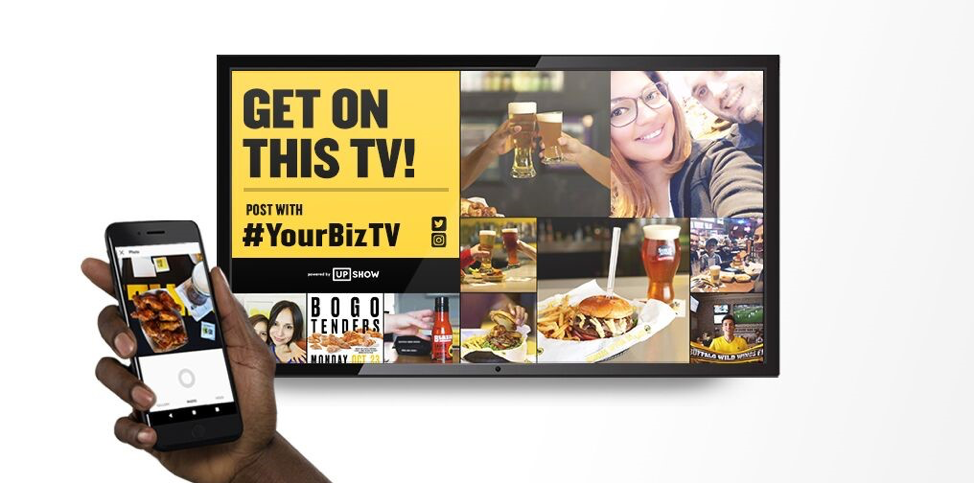
    UPshow, the company I co-founded, is a social TV platform that companies such as Crunch Fitness, Cheddar’s Scratch Kitchen and ATI Physical Therapy are using to transform their customers into immediate influencers.  The platform entices customers to post on social media by projecting them on big screens in-venue. As a result, friends and family, also see and are often influenced by the posts. The content and choice to participate is totally in the hands of the consumer.

    Upshow.png

    Other companies also provide services that cater to this trend, such as Guest Crew and Woobox.  Their platforms harness user-generated content and boost it organically. Guest Crew leverages a community of organically generated influencers and Woobox turns user-generated content into contests.  Filtergrade uses professional photo grade filters (such as Adobe Lightroom presets) to help brands generate more professional quality shareable images that are unique and micro-influencers can use them too to make their posts mimic celebrity influencer quality.

    It’s a new era for user-generated content and if brands want to appeal to younger audiences, such as millennials and GenZ, they need to embrace the social media trends that will improve their engagement rates by putting the power in the hands of the consumer in a genuine way.  

    ********

    Matt Gibbs is co-founder and Chief Marketing Officer of UPshow, a consumer engagement platform that transforms a business’s existing TVs into its top marketing assets.  Gibbs is responsible for branding, lead generation and advertising for the

    matt.png

    company. Gibbs is a genuine entrepreneur and trailblazer in digital media with deep roots in the Chicago start-up community. Along with college friend and UPshow CEOAdam Hirsen, Gibbs co-founded SparkReel in 2011. SparkReel created a more efficient way for friends and family to share mobile videos online and evolved into a social media agency that created user-generated content campaigns for Verizon, Oreo, Condé Nast, Apartments.com, among others. UPshow was born out of SparkReel when customers wanted social media engagement screens at events. Gibbs graduated from Miami University of Ohio and resides in Chicago, IL with his wife, two children and corgi.

    Authority, Impact, and the Future of Influence Marketing

    Influencer marketing is the most powerful tool in getting a brand’s message to an interested audience in a relevant and authentic way. Whether launching a new product or just trying to raise brand awareness, it’s effective in driving engagement, visibility,quality traffic, and more. Last week I spoke at ClickZ Live New York on Authority, Impact, and the Future of Influence Marketing.

    The future of influence marketing is up and coming as marketers are trying to hone in on how to develop relationships with key influencers with hopes to lift awareness of their brands. It’s not enough to market through influencers, now it’s crucial to find a way to collaborate in partnerships with influencers.

    Within my speech I discussed the four rules of influencer marketing:

    1) Popularity Does NOT Equal influence.

    2) To be influential, a person has to be actively writing on topics which matter to your audience.

    3) To be influential, a person has to have authority.

    4) Influencer’s drive action.

    Platforms like Instagram and YouTube have led to the rise of a new generation of influencers that have amassed huge followings on niche subject matters. A research study by Nielsen showed that buyers trust experts and influencers over branded content. It’s important start a campaign with a precise set of goals, and understand the purpose of your influencer outreach plan.  Whether its to get them to be a brand advice, guest blog, or vouch for your brand you must begin by defining concise targets and have various KPI’s for various social media networks.

    So how can you find Influencers? Great Question, here are some of my favorite (and free!) tools:

    1) Follower Wonk Enables you to find, analyze, and optimize for social growth, and search bios of those influencers you’re after (especially very niche topics!).

    2) Twitter provides free analytics which outlines top followers, influencers, and also gives a nice overview of your impressions, mentions, and more.  I also find using twitter lists to be an excellent way to tap into and influencer and “digest” twitter in a more streamlined manner.

    3) BuzzSumo allows you to find the most shared content and see what content performs best, as well as discover key influencers.

    4) Topsy is one of my favorite tools to search all tweets and measure social trends, but they’ve also got an influencer option which has proven quite helpful.

    5) Klout is the original tool to rank influencers based upon social networks and reach, they’ve started a content first approach, but hey, I still get free perks, and i’m still a fan!

    Once you’ve found your influencers it’s important to get closer and engage with them using social media.  Being socially active you’ll be one step closer to your influential audience.  When reaching out to an influencer you’ve got to recruit, initialize and grow your relationship, and then nurture. Make sure your outreach is relevant.  Taking time to research your target influencers interests, and understand who they are and what they like is crucial.  Engage on social media by sharing an article, providing an opinion, and engaging when them in conversation without an ask. Once you’ve built your initial conversation pitch free it’s important to reach out offline to discuss next steps, and if possible remind them of your discussion and engagement to spark the conversation.

    My slideshare from ClickZ Live is below, and remember Jay Baer’s quote, “Content is fire. Social Media is Gasoline.” When done right tapping into this new generation of influencers can put your brand on the map, increase traffic, engagement, and so much more.

    What do you think of the presentation, send me a tweet @MarissaPick, or leave a comment below.